

Principle and Working Scene Characteristics of Sand Powder Pneumatic Conveying Equipment
HeadPowder, a leading enterprise in the field of powder handling technology, specializes in the design, manufacturing, and supply of advanced pneumatic conveying systems. With a strong commitment to innovation and quality, the company has established itself as a trusted partner for industries requiring reliable and efficient material transport solutions. HeadPowder's headquarters is located in Shandong, China, where the company leverages local resources and expertise to deliver cutting-edge solutions tailored to global market needs.


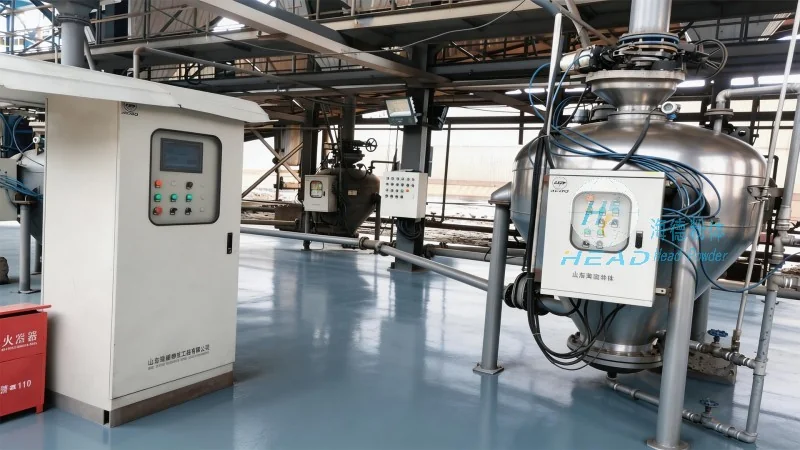

Principle of Sand Powder Pneumatic Conveying Equipment
The core principle of sand powder pneumatic conveying equipment lies in the utilization of air pressure to transport particulate materials such as sand. This technology operates by creating a pressure differential between the conveying line and the ambient environment. When air is introduced into the system, it generates a flow that propels the sand particles through the pipeline. The equipment typically consists of a blower, a hopper for material storage, a conveying line, and a discharge point. The blower provides the necessary air pressure, while the hopper ensures a consistent supply of sand. The conveying line, often made of durable materials like stainless steel or PVC, is designed to withstand the abrasive nature of sand particles. The discharge point allows the sand to be deposited at the desired location, completing the transport process. This pneumatic method offers a non-contact, continuous, and efficient means of moving sand, eliminating the need for mechanical components that may suffer from wear and tear in traditional belt or bucket systems. The pneumatic conveying process begins with the loading of sand into the hopper. A rotary valve or feeder then controls the flow of sand into the conveying line, ensuring a consistent feed rate. The blower, typically an industrial-grade centrifugal or positive displacement type, generates the required air pressure, which is then introduced into the conveying line. As the air flows through the line, it picks up the sand particles and transports them to the discharge point. The discharge point may include a cyclone separator or a filter to separate the sand from the air, allowing the air to be recirculated or vented safely. This closed-loop system minimizes energy loss and enhances overall efficiency. The design of the conveying line, including bends and elbows, is optimized to minimize pressure drop and prevent particle accumulation, ensuring smooth and continuous operation. The materials used in the construction of the equipment, such as high-strength steel or corrosion-resistant alloys, are selected to withstand the abrasive and corrosive properties of sand, extending the equipment's service life and reducing maintenance costs.
Working Scene Characteristics of Sand Powder Pneumatic Conveying Equipment
The working scene characteristics of sand powder pneumatic conveying equipment are tailored to meet the diverse demands of industrial applications. In the construction industry, for instance, these systems are widely used to transport sand from storage silos to concrete mixing plants, ensuring a steady supply of raw materials for concrete production. The equipment's ability to handle large volumes of sand efficiently reduces downtime and enhances production throughput. In the foundry industry, sand is a critical component in the manufacturing of molds and cores. Pneumatic conveying systems enable the precise and controlled delivery of sand to molding machines, improving the quality and consistency of the final products. Additionally, in the mining and processing sectors, these systems are employed to transport sand from processing facilities to storage areas or for further processing. The flexibility of pneumatic conveying allows for integration with existing production lines, minimizing the need for additional infrastructure. The equipment's design also addresses environmental considerations, as it eliminates dust emissions associated with manual handling or mechanical conveyors, contributing to a cleaner and safer working environment. Furthermore, the system's ability to operate under varying pressure conditions makes it suitable for both low and high-volume transport requirements, providing adaptability across different operational scales. For example, in the construction sector, the equipment is often integrated with concrete batching plants. The sand is conveyed from a storage silo to the batching area, where it is mixed with cement, water, and other aggregates to form concrete. The pneumatic system ensures that the sand is delivered at the correct moisture content and in the right quantity, which is crucial for achieving the desired concrete strength and consistency. In the foundry industry, the system plays a vital role in the production of sand molds. The sand is transported from the storage area to the molding machine, where it is compacted and shaped into molds. The precision of the pneumatic conveying system helps maintain the uniformity of the sand, leading to better mold quality and reduced defects in the final castings. Additionally, in the chemical and pharmaceutical industries, where sand may be used as a filler or abrasive material, the equipment's ability to handle fine particles without clogging is essential. The system's design, with its smooth internal surfaces and minimal dead zones, prevents the accumulation of sand particles, ensuring reliable and uninterrupted operation. The environmental benefits of pneumatic conveying are also significant, as it eliminates the need for dust collection systems associated with traditional handling methods. By containing the sand within the conveying line, the system reduces dust emissions, improving air quality and compliance with environmental regulations. This makes the equipment particularly suitable for applications where occupational health and safety are paramount.