

Principle and Working Scene Characteristics of PEARL SALT Granular Material Pneumatic Conveying
HeadPowder, a leading provider in the field of material handling solutions, specializes in advanced pneumatic conveying systems tailored for various industrial applications. This article delves into the fundamental principles of pneumatic conveying for pearl salt granular materials and highlights the key working scene characteristics that define its effectiveness and efficiency in real-world industrial settings.

Introduction to Pneumatic Conveying for Pearl Salt Granular Materials
Pneumatic conveying is a widely adopted method for transporting bulk materials like pearl salt granules through a pipeline using air or gas as the conveying medium. This technology offers numerous advantages over traditional mechanical conveying systems, including reduced equipment wear, lower maintenance costs, and the ability to handle materials in a dust-free environment. At Shandong HeadPowder Engineering Co., Ltd., we have developed specialized systems that optimize the pneumatic conveying process for pearl salt, ensuring reliable and efficient material transport across different industrial sectors.
The Core Principle of Pneumatic Conveying
The fundamental principle of pneumatic conveying for pearl salt granular materials involves the creation of a pressure differential within a pipeline. By introducing air or gas under pressure, the conveying system lifts and propels the granules through the pipeline. There are two primary types of pneumatic conveying systems: dilute-phase and dense-phase. Dilute-phase systems operate at higher velocities, typically using low-pressure air to move materials, while dense-phase systems use higher pressure and lower velocity to transport materials more gently, minimizing product degradation and pipeline wear. For pearl salt, the choice between these systems depends on factors such as material characteristics, pipeline length, and desired delivery conditions.
Key Working Scene Characteristics of Pneumatic Conveying Systems
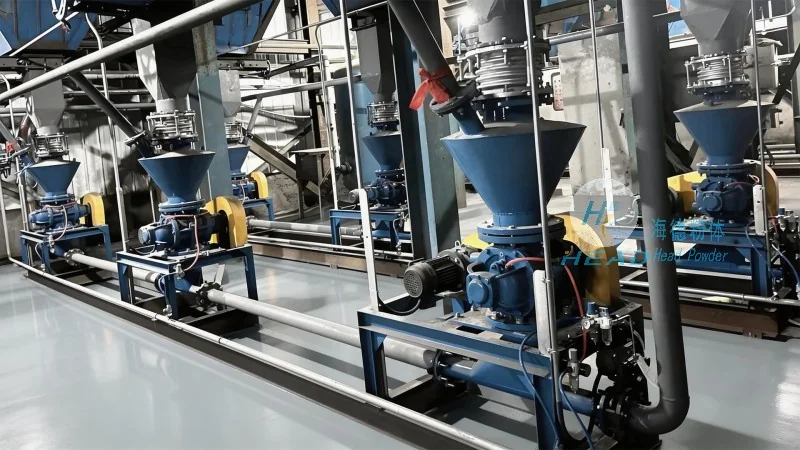
The effectiveness of pneumatic conveying systems for pearl salt granular materials is defined by several critical working scene characteristics. These include the system's ability to handle varying particle sizes and moisture content, maintain consistent material flow rates, and ensure minimal product degradation during transport. Additionally, the system's energy efficiency and operational reliability are crucial factors in industrial applications. Shandong HeadPowder Engineering Co., Ltd. designs systems that address these characteristics by incorporating advanced control mechanisms and high-quality components, ensuring optimal performance in diverse working environments.
Industrial Applications and Working Scene Examples
Pneumatic conveying systems for pearl salt granular materials are widely used in various industrial applications, including food processing, chemical manufacturing, and pharmaceutical production. For instance, in food processing facilities, these systems are employed to transport pearl salt from storage silos to processing lines, maintaining hygiene and preventing contamination. In chemical plants, they facilitate the transfer of pearl salt between processing units, ensuring smooth production workflows. The working scene characteristics of these systems, such as their ability to handle high volumes of material and operate in controlled environments, make them ideal for these applications. HeadPowder's expertise in designing customized pneumatic conveying solutions ensures that these systems meet the specific requirements of each industrial setting, enhancing overall operational efficiency.

Advantages and Considerations in Pneumatic Conveying for Pearl Salt
Implementing pneumatic conveying systems for pearl salt granular materials offers several advantages, including reduced labor costs, improved safety, and enhanced product quality. However, there are also considerations to keep in mind, such as the need for proper system maintenance, the selection of appropriate air pressure, and the management of material flow rates. Shandong HeadPowder Engineering Co., Ltd. provides comprehensive support, including system design, installation, and maintenance services, to ensure that clients can fully leverage the benefits of pneumatic conveying while addressing any potential challenges.
Conclusion
In conclusion, pneumatic conveying is a highly effective method for transporting pearl salt granular materials, offering significant advantages over traditional conveying methods. The working scene characteristics of these systems, combined with advanced design and engineering from Shandong HeadPowder Engineering Co., Ltd., make them a reliable choice for various industrial applications. By understanding the core principles and key characteristics of pneumatic conveying, industries can optimize their material handling processes, improve efficiency, and enhance overall operational performance.