

Operation Process and Working Principle of Pneumatic Powder Conveying System
For industrial applications that require efficient and reliable material handling, pneumatic powder conveying systems offer a versatile solution. These systems are designed to transport bulk materials such as powders, granules, and fine particles through a network of pipes using air pressure. The operation of such systems involves several key components and processes that work in tandem to ensure smooth and effective material transfer. In this article, we will explore the detailed operation process and working principles of a pneumatic powder conveying system, highlighting the role of each component and the mechanisms that enable efficient material movement.

Key Components of a Pneumatic Powder Conveying System
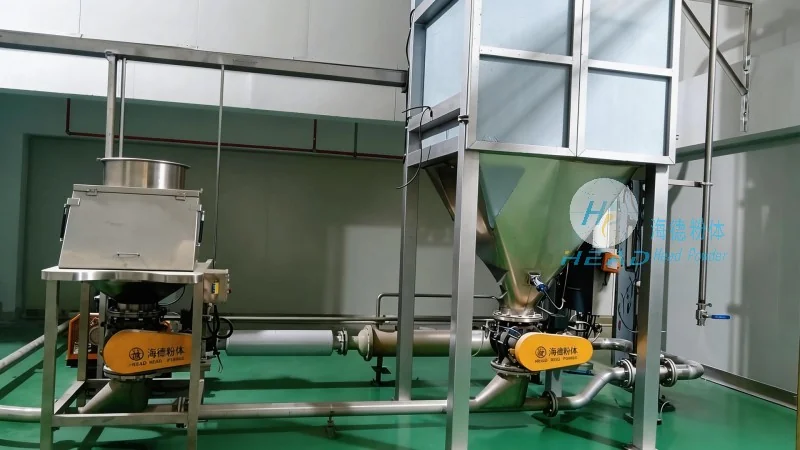
Before delving into the operation process, it is essential to understand the primary components that make up a pneumatic powder conveying system. These components include the material feeder, air compressor, conveying line, control valves, and dust collector. Each component plays a critical role in the overall system performance. The material feeder is responsible for feeding the bulk material into the system, while the air compressor generates the necessary air pressure to move the material through the pipes. The conveying line, typically made of stainless steel or other corrosion-resistant materials, transports the material from the feeder to the discharge point. Control valves regulate the air flow and pressure, ensuring optimal conveying conditions. Finally, the dust collector captures any airborne particles to maintain a clean and safe working environment.
The Operation Process of a Pneumatic Powder Conveying System
The operation of a pneumatic powder conveying system follows a systematic sequence of steps. The process begins with the material feeder, which continuously supplies the bulk material into the system. The feeder may be a hopper or a screw feeder, depending on the material characteristics and application requirements. As the material enters the feeder, it is drawn into the conveying line by the air pressure generated by the compressor. The air, moving at high velocity, creates a negative pressure in the line, which pulls the material particles along with it. This combination of air flow and material particles forms a dense phase or dilute phase stream, depending on the system design and operating conditions.

During the conveying process, the material is transported through the pipeline to the discharge point. The control valves are used to adjust the air pressure and flow rate, ensuring that the material reaches the destination without clogging or excessive pressure buildup. The system may include multiple conveying lines or branches to handle different material streams or to distribute the material to various locations. The discharge point is typically equipped with a receiver or a storage hopper, where the material is collected and prepared for further processing or packaging.
Working Principles of Pneumatic Powder Conveying
The working principle of a pneumatic powder conveying system is based on the principles of fluid dynamics and particle transport. The system utilizes compressed air to create a flow that moves the material particles through the pipeline. The key principles include the Bernoulli effect, which describes the relationship between pressure and velocity in a fluid, and the drag force, which is the force exerted by the air on the material particles. The air velocity in the pipeline must be sufficient to overcome the gravitational and frictional forces acting on the material particles, ensuring that they remain suspended and transported efficiently.
In a dense phase conveying system, the material is transported in a compacted form, where the particles are closely packed together. This mode of operation is suitable for materials that are prone to segregation or for applications where low air consumption is required. The dense phase system operates at lower air velocities and higher pressure, which reduces the risk of material degradation and improves overall efficiency. In contrast, a dilute phase system transports the material in a more dispersed form, with larger air-to-material ratios. This mode is commonly used for longer conveying distances or for materials that are less abrasive.

Advantages and Applications of Pneumatic Powder Conveying Systems
Pneumatic powder conveying systems offer several advantages over traditional mechanical conveying methods. These include flexibility in system design, as the pipeline can be easily modified or expanded to accommodate changing production needs. The systems are also capable of handling a wide range of materials, from fine powders to coarse granules, without the need for additional equipment. Additionally, pneumatic conveying systems are relatively low maintenance, as they have fewer moving parts compared to mechanical systems. The systems are also suitable for applications that require dust-free or clean environments, as the material is contained within the pipeline.
These systems are widely used in various industries, including pharmaceuticals, food processing, chemical manufacturing, and mining. In the pharmaceutical industry, pneumatic conveying is used to transport active ingredients and excipients with high precision and minimal contamination. In food processing, the systems are used to handle powders such as flour, sugar, and spices, ensuring that the material remains free from moisture and contaminants. In chemical manufacturing, the systems are used to transport reactive powders and granules, providing a safe and efficient method of material handling. In mining, pneumatic conveying is used to transport ore and other bulk materials from the mine to processing facilities, reducing the need for heavy machinery and improving operational efficiency.