

Operation Process and Working Principle of Positive Pressure Dense Phase Powder Conveying Equipment
HeadPowder, a leading engineering company based in Shandong, China, specializes in the design, manufacturing, and application of positive pressure dense phase powder conveying equipment. This article provides a detailed exploration of the operational process and working principles of such systems, highlighting their efficiency and reliability in handling bulk powder materials.

Working Principle of Positive Pressure Dense Phase Conveying
The core principle of positive pressure dense phase conveying involves transporting powder materials in a dense, plug-flow state under positive pressure. Unlike traditional pneumatic conveying methods that rely on low-pressure or vacuum systems, this technology maintains a high-pressure environment within the conveying line. The process begins with the powder being fed into a hopper or feeder, where it is then introduced into a high-pressure air stream. The air, typically compressed to pressures ranging from 5 to 15 bar, creates a dense mixture of powder and air, forming a plug-like flow. This dense phase flow ensures minimal particle separation and reduces the risk of dust emissions, making it ideal for handling fine or abrasive powders.
Operational Process of the Equipment
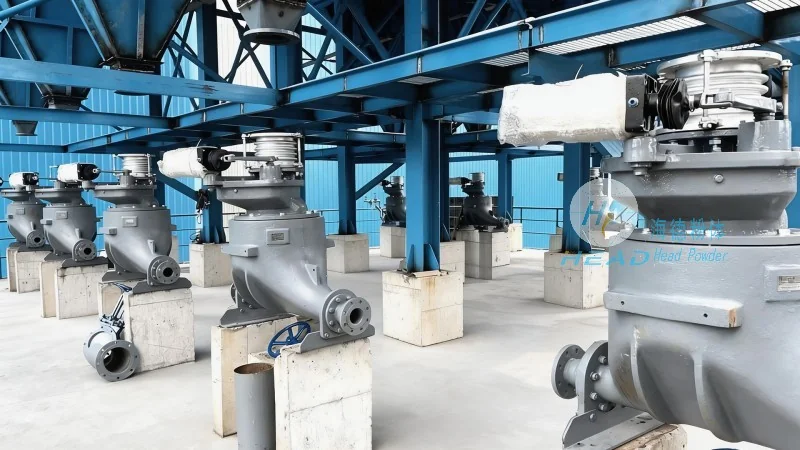
The operational process of a positive pressure dense phase powder conveyor can be broken down into several key stages. First, the powder is stored in a bulk storage silo or hopper. A feeder, such as a rotary valve or screw feeder, controls the flow rate of the material into the conveying line. The feeder is connected to a high-pressure air compressor, which supplies the necessary air pressure to the system. The compressed air is then mixed with the powder in a venturi or mixing chamber, creating the dense phase flow. The mixture travels through the pipeline to the destination silo or processing unit. At the receiving end, a pressure regulator or venturi reduces the pressure, allowing the powder to discharge smoothly. The system is equipped with safety features, including pressure relief valves and dust collection systems, to ensure safe and efficient operation.
Key Features and Benefits
Positive pressure dense phase conveying systems offer several advantages over conventional conveying methods. These include high conveying capacity, which allows for the transport of large volumes of powder in a short time. The dense phase flow minimizes particle segregation, preserving the quality and consistency of the material. Additionally, the high-pressure operation reduces the risk of blockages and ensures smooth flow through long or complex pipelines. The technology is also energy-efficient, as it uses less air compared to low-pressure systems, leading to lower operational costs. Furthermore, the system is suitable for a wide range of powder types, including fine, cohesive, or abrasive materials, making it versatile for various industrial applications.

Applications in Industrial Settings
These conveying systems are widely used in various industries, including chemical, pharmaceutical, food, and mining. In the chemical industry, they are used to transport raw materials and finished products, such as powders for coatings or pigments. In the pharmaceutical sector, the systems ensure the safe and hygienic handling of active pharmaceutical ingredients (APIs) and excipients. The food industry utilizes them for conveying ingredients like flour, sugar, or spices, maintaining product quality and preventing contamination. In mining operations, the equipment is used to transport bulk materials like ores or minerals from storage to processing plants. The versatility and reliability of positive pressure dense phase conveying make it a preferred choice for industries requiring efficient and safe powder handling solutions.
Maintenance and Safety Considerations
Proper maintenance is crucial to ensure the long-term performance and safety of positive pressure dense phase conveying equipment. Regular inspection of the air compressor, feeder, and pipeline is necessary to check for wear and tear or blockages. The system should be cleaned regularly to prevent the buildup of powder residues, which can affect performance. Safety features, such as pressure relief valves and dust collection systems, must be maintained and tested periodically to ensure they function correctly. Operators should be trained on the proper operation and emergency procedures of the system to prevent accidents. By following these maintenance and safety guidelines, the equipment can operate efficiently and safely, providing reliable powder transport solutions for years.