

Operation Process and Working Principle of Sawdust and Husk Powder Conveyors
At Shandong HeadPowder Engineering Co., Ltd., we specialize in the design and manufacturing of efficient powder conveyors tailored for handling materials like sawdust and husk. These machines are essential in various industrial applications where reliable and low-cost material transport is required. The sawdust and husk powder conveyors we provide are engineered to meet the specific demands of processing industries, ensuring optimal performance and durability.
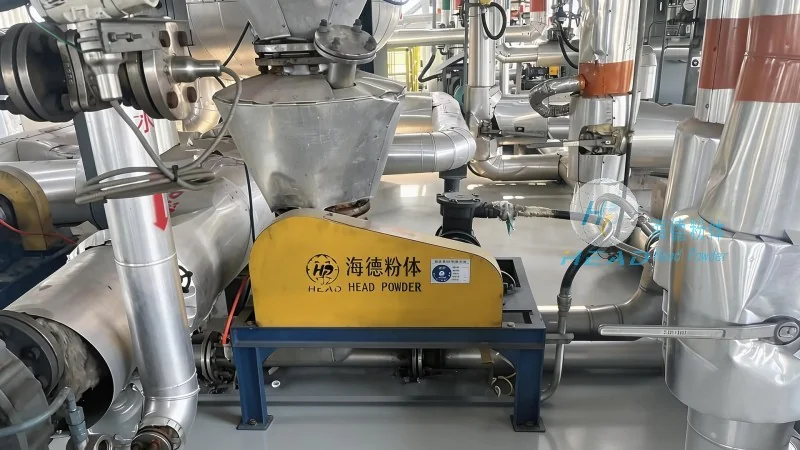
Key Components and Structure
The sawdust and husk powder conveyor consists of several critical components that work in tandem to facilitate the smooth transport of powders. The main body of the conveyor is typically constructed from robust materials such as stainless steel or high-grade plastic, which are chosen for their resistance to wear and corrosion from the abrasive nature of sawdust and husk particles. The conveyor system includes a hopper at the inlet for material storage, a screw or auger mechanism that acts as the primary transport element, and an outlet for dispensing the material at the desired location. Additionally, the system may incorporate a drive unit, usually a motor, that powers the screw or auger, and a control panel for adjusting the speed and direction of material flow.

Operation Process
The operation of the sawdust and husk powder conveyor begins with the loading of material into the hopper. As the material accumulates, it is gradually fed into the screw or auger mechanism. The rotating screw or auger then pushes the material forward through the conveyor tube or channel. The design of the screw or auger, with its helical blades, ensures that the material is moved efficiently without excessive pressure or blockage. The conveyor continues to transport the material until it reaches the outlet, where it is discharged into a collection bin or processing unit. The entire process is controlled by the drive unit, which can be adjusted to maintain a consistent flow rate based on the material's characteristics and the required output.
Working Principle
The working principle of the sawdust and husk powder conveyor is based on the mechanical action of a rotating screw or auger. This principle is commonly known as the "screw conveyor" or "auger conveyor" mechanism. The screw or auger rotates within a closed or semi-closed housing, creating a continuous flow of material along the axis of the conveyor. The helical design of the screw blades provides a self-feeding action, where the material is drawn into the conveyor and propelled forward by the rotating blades. The speed of the screw or auger determines the rate of material transport; higher speeds result in increased throughput, while lower speeds allow for more precise control over the flow. The system is designed to handle fine powders like sawdust and husk, which can be prone to clogging if not properly managed. The use of smooth, non-stick surfaces on the conveyor housing and blades helps to minimize friction and prevent material buildup, ensuring continuous and reliable operation.

Advantages and Applications
Sawdust and husk powder conveyors offer several advantages that make them ideal for industrial applications. These include low energy consumption compared to other transport methods, such as pneumatic conveyors, due to the mechanical nature of the system. They are also relatively simple to install and maintain, with minimal moving parts that can be easily inspected and serviced. The conveyors are suitable for a wide range of applications, including wood processing facilities, agricultural processing plants, and biomass energy production sites, where sawdust and husk are used as raw materials for fuel or other products. The ability to handle large volumes of material efficiently and at a consistent rate makes these conveyors a cost-effective solution for material transport in various industries.