

Operation Process and Working Principle of Flocculant Dry Powder Material Conveying Line
Understanding the operation process and working principle of a flocculant dry powder material conveying line is crucial for optimizing industrial processes that involve the handling of fine powders. This equipment is designed to efficiently transport flocculants, which are essential in water treatment and other industrial applications, ensuring consistent and reliable material flow. The following sections will delve into the detailed operation process and the underlying working principles of such a system, providing insights into its functionality and benefits.

Company Overview: HeadPowder
HeadPowder, a leading manufacturer based in Shandong, China, specializes in the design, production, and supply of advanced material handling equipment. With a strong commitment to quality and innovation, the company has established itself as a trusted partner in the industrial sector. The company’s headquarters is located in Shandong, China, where it operates its research and development facilities, manufacturing plants, and customer service centers. HeadPowder’s products are engineered to meet the stringent requirements of various industries, including water treatment, chemical processing, and environmental protection, offering reliable and efficient solutions for material transportation challenges.
System Components and Layout
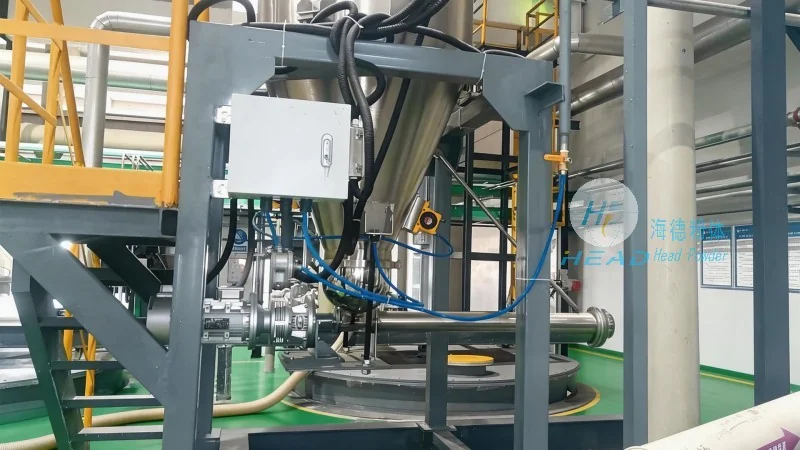
A typical flocculant dry powder material conveying line consists of several key components that work in tandem to ensure smooth operation. The main components include a hopper for material storage, a feeder to control the flow rate, a conveyor system (such as a screw conveyor or pneumatic conveyor) for transporting the material, a control panel for monitoring and regulating the process, and a dust collection system to maintain air quality. The layout of the system is designed to minimize material loss, reduce downtime, and enhance safety. The hopper is typically equipped with a lid and a discharge valve to control the release of the flocculant powder. The feeder ensures a consistent and controlled flow of the material into the conveyor system, preventing overloading or underloading. The conveyor system is chosen based on the properties of the flocculant, such as its particle size, moisture content, and flowability, to ensure efficient transport. The control panel allows operators to monitor the system’s performance, adjust the flow rate, and detect any abnormalities. The dust collection system is essential for maintaining a clean and safe working environment by capturing and filtering airborne particles.

Operation Process
The operation process of a flocculant dry powder material conveying line involves several steps that ensure the material is transported from the storage hopper to the destination point efficiently and safely. The process typically begins with the loading of the flocculant powder into the hopper. The hopper is then sealed to prevent contamination and dust emission. Next, the feeder is activated to control the flow rate of the material into the conveyor system. The conveyor system then transports the material to the desired location, such as a mixing tank or a storage silo. The control panel continuously monitors the system’s performance, adjusting the flow rate as needed to maintain a consistent material supply. The dust collection system operates simultaneously to capture any airborne particles, ensuring that the working environment remains clean and safe. The entire process is automated, allowing for minimal human intervention and maximizing efficiency. The system is designed to operate continuously, with regular maintenance checks to ensure optimal performance. During operation, operators may need to adjust the flow rate or check the system’s components to ensure that the material is being transported correctly. The process is typically monitored through the control panel, which provides real-time data on the system’s performance, including flow rate, pressure, and temperature. Any abnormalities, such as a drop in flow rate or an increase in pressure, are immediately detected and addressed to prevent system failure.
Working Principle
The working principle of a flocculant dry powder material conveying line is based on the principles of fluid dynamics and mechanical engineering. The system uses a combination of mechanical and pneumatic forces to transport the material. The hopper stores the flocculant powder, and the feeder controls the flow rate by using a rotating screw or a vibrating mechanism. The conveyor system then transports the material using a screw or a pneumatic tube, depending on the system design. The control panel regulates the system’s operation by monitoring the flow rate, pressure, and temperature. The dust collection system uses filters to capture the airborne particles, ensuring that the working environment remains clean. The entire system is designed to be energy-efficient and environmentally friendly, with minimal waste and emissions. The flocculant powder is transported in a dry state, which is essential for maintaining its quality and preventing caking or agglomeration. The system is also designed to be flexible, allowing for adjustments to the flow rate and the destination point as needed. The working principle is based on the principle of continuous flow, where the material is continuously fed into the system and transported to the destination point without interruption. This ensures that the material is delivered in a consistent and reliable manner, meeting the requirements of various industrial applications.
Benefits and Applications
The flocculant dry powder material conveying line offers several benefits and is widely used in various industrial applications. The system provides efficient and reliable transportation of flocculant powder, which is essential for water treatment and other industrial processes. The system is designed to minimize material loss and reduce downtime, improving overall productivity. The dust collection system ensures a clean and safe working environment, reducing the risk of respiratory issues and other health problems. The system is also energy-efficient, reducing operating costs and environmental impact. The flocculant powder is transported in a dry state, which maintains its quality and prevents caking or agglomeration. The system is widely used in water treatment plants, where flocculants are used to remove impurities from water. It is also used in chemical processing plants, where flocculants are used to separate solids from liquids. Additionally, the system is used in environmental protection applications, where flocculants are used to treat wastewater and other industrial effluents. The system’s flexibility and adaptability make it suitable for various industrial applications, providing a reliable and efficient solution for material transportation challenges.