

Operation Process and Working Principle of Glass Fiber Cellulose Material Conveying Line
HeadPowder, a leading manufacturer in the field of material handling systems, specializes in providing efficient and reliable conveying solutions for various industrial applications. This article delves into the operation process and working principle of a glass fiber cellulose material conveying line, highlighting the key components, operational steps, and technical aspects that ensure smooth and effective material transport. The company, based in Shandong, China, has established itself as a trusted partner for businesses seeking advanced material handling technologies.
Introduction to Glass Fiber Cellulose Material Conveying Lines
Glass fiber cellulose is a widely used material in the manufacturing industry, often utilized in applications such as insulation, filtration, and composite production. The efficient transport of this material is crucial for maintaining production efficiency and minimizing downtime. A well-designed conveying line for glass fiber cellulose combines advanced engineering with robust components to ensure consistent and safe material movement. HeadPowder Engineering Co., Ltd., headquartered in Shandong, China, has developed specialized systems tailored to handle the unique properties of glass fiber cellulose, including its fibrous nature and potential for dust generation.
Key Components of the Conveying Line
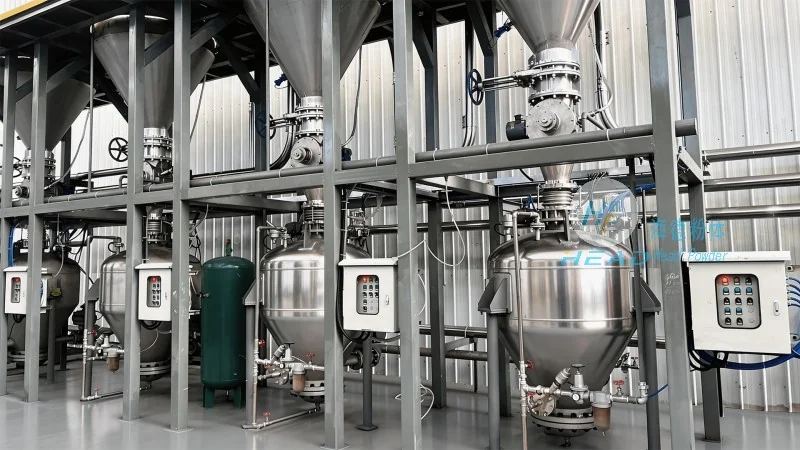
The glass fiber cellulose material conveying line typically consists of several critical components that work in tandem to facilitate material transport. These components include feed hoppers, conveyor belts or screw conveyors, dust collection systems, and control panels. Each component plays a vital role in the overall operation of the system. The feed hopper is responsible for storing and feeding the glass fiber cellulose material into the conveying system. It is designed to handle bulk quantities of the material and ensure a steady flow into the conveyor. The conveyor system, which may be a belt conveyor or a screw conveyor depending on the application, transports the material from the feed hopper to the processing or storage area. The belt conveyor is commonly used for lighter loads and provides smooth, continuous movement, while the screw conveyor is ideal for handling fibrous materials that may tend to stick or clog. Additionally, a dust collection system is integrated into the line to manage airborne particles and maintain a clean working environment. This system typically includes filters and a vacuum or pressure system to capture and remove dust, preventing contamination and ensuring compliance with environmental regulations. The control panel allows operators to monitor and control the entire conveying process, adjusting parameters such as speed, feed rate, and dust collection efficiency as needed.

Operation Process of the Conveying Line
The operation of the glass fiber cellulose material conveying line follows a systematic process that ensures efficient material handling. The process begins with the loading of glass fiber cellulose into the feed hopper. The material is then fed into the conveyor system, which transports it to the desired location. The speed of the conveyor is controlled to maintain a consistent flow rate, preventing overloading or underloading of the system. As the material moves through the conveyor, it may pass through a series of processing steps, such as screening or blending, depending on the application. The dust collection system continuously operates to capture any airborne particles, ensuring that the working environment remains clean and safe. The control panel provides real-time monitoring of the system's performance, allowing operators to detect and address any issues promptly. The entire process is designed to be automated to a large extent, reducing the need for manual intervention and minimizing the risk of human error. This automation enhances the overall efficiency and reliability of the conveying line, making it suitable for continuous production environments.
Working Principle of the Conveying Line
The working principle of the glass fiber cellulose material conveying line is based on the principles of mechanical transport and material flow. The system uses a combination of gravity, friction, and mechanical force to move the material from the feed hopper to the discharge point. The feed hopper provides a controlled feed rate, ensuring that the material enters the conveyor at a consistent rate. The conveyor system then uses a rotating mechanism, such as a belt or screw, to move the material forward. The speed of the conveyor is adjusted to maintain the desired flow rate, which is critical for preventing material buildup or clogging. The dust collection system operates in parallel with the conveyor, capturing any particles that are released during the material transport process. This system typically uses a filter to trap the dust, which is then collected in a hopper for disposal or recycling. The control panel monitors the system's performance by measuring parameters such as flow rate, pressure, and temperature. Any deviations from the set parameters are detected and corrected automatically, ensuring that the system operates within its optimal range. The overall working principle is designed to be robust and reliable, capable of handling the unique challenges posed by glass fiber cellulose materials, such as their fibrous nature and potential for dust generation.

Benefits of Using a Glass Fiber Cellulose Material Conveying Line
Implementing a glass fiber cellulose material conveying line offers several benefits to industrial operations. Firstly, it enhances production efficiency by ensuring a continuous and consistent flow of material, reducing downtime and increasing throughput. The automated control system minimizes the need for manual intervention, allowing operators to focus on other critical tasks. Secondly, the system improves safety by reducing the risk of manual handling of fibrous materials, which can be hazardous. The dust collection system also helps to maintain a clean and safe working environment, reducing the risk of respiratory issues and other health problems associated with dust exposure. Thirdly, the system is designed to be energy-efficient, using minimal power to achieve the desired material transport. This reduces operational costs and contributes to a more sustainable manufacturing process. Finally, the system is highly customizable, allowing HeadPowder Engineering Co., Ltd. to tailor the design to meet the specific needs of each client. This customization ensures that the conveying line is optimized for the particular application, maximizing its effectiveness and reliability.
Conclusion
In conclusion, the glass fiber cellulose material conveying line is a sophisticated and efficient system designed to handle the unique challenges of transporting glass fiber cellulose materials. HeadPowder Engineering Co., Ltd., based in Shandong, China, has developed advanced systems that incorporate robust components, automated controls, and effective dust management to ensure smooth and reliable operation. The operation process and working principle of the line are carefully designed to maximize efficiency, safety, and sustainability, making it an ideal solution for industrial applications. By leveraging the expertise of HeadPowder, businesses can enhance their material handling capabilities and improve overall production performance.