

Operation Process and Working Principle of Sintering Dust Removal Material Conveying System Equipmen
HeadPowder, formally known as Shandong HeadPowder Engineering Co., Ltd., is a professional manufacturer based in Shandong, China. The company specializes in the design, development, and production of advanced material handling equipment, particularly focusing on systems for sintering dust removal and material conveying. With a strong commitment to technological innovation and quality assurance, HeadPowder provides reliable solutions tailored to the needs of various industrial sectors.

Overview of the Sintering Dust Removal Material Conveying System
The sintering dust removal material conveying system is a critical component in sintering production lines, designed to efficiently collect, transport, and process dust and fine particles generated during the sintering process. This system ensures environmental compliance and material recovery by integrating dust collection, filtration, and material transport functionalities. The equipment is engineered to handle high-volume dust loads and maintain consistent performance under varying operational conditions.
System Components and Structure
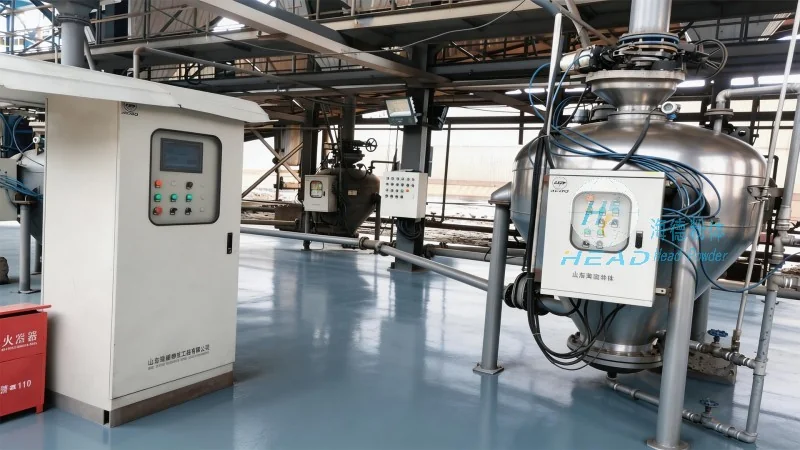
The sintering dust removal material conveying system typically consists of several key components, each playing a vital role in the overall operation. These components include dust collection hoppers, air filtration units, material transport conveyors, and control systems. The dust collection hoppers are strategically positioned to capture dust at the source, while the air filtration units use advanced technologies such as bag filters or electrostatic precipitators to separate dust particles from the air stream. The material transport conveyors, often equipped with flexible hoses or rigid pipelines, ensure the safe and efficient transfer of collected dust to storage or processing facilities. The control system integrates sensors and automation to monitor and regulate the entire process, ensuring optimal performance and minimal downtime.
Operation Process of the System
The operation of the sintering dust removal material conveying system follows a systematic sequence to ensure efficient dust collection and material transport. The process begins with the sintering process itself, where dust and fine particles are generated as byproducts. These particles are then drawn into the dust collection hoppers by a system of fans or blowers. The air stream containing dust is then directed to the air filtration units, where the dust particles are separated from the air through filtration or precipitation. The cleaned air is released back into the environment, while the collected dust is transferred to the material transport conveyors. The conveyors then transport the dust to designated storage areas or processing units for further use. The control system continuously monitors parameters such as air flow, dust concentration, and conveyor speed, adjusting operations as needed to maintain optimal performance. This cycle repeats continuously, ensuring a steady supply of dust removal and material transport throughout the sintering operation.

Working Principle of the System
The working principle of the sintering dust removal material conveying system is based on the principles of air filtration and material transport. The system operates by creating a negative pressure in the dust collection hoppers, which draws in the air and dust particles from the sintering area. The air stream is then passed through a filtration medium, where the dust particles are trapped and collected. The clean air is then discharged, while the collected dust is removed from the filter and transferred to the conveyor system. The conveyor system uses mechanical force, such as belts or screws, to move the dust along the pipeline to the storage or processing location. The control system uses sensors to detect the level of dust in the hoppers and the status of the filtration units, ensuring that the system operates within safe and efficient parameters. This integrated approach ensures that the system effectively removes dust from the sintering process while recovering valuable material for reuse.