

Operation Process and Working Principle of Potassium Carbonate Powder Pneumatic Conveying Line
Efficient material handling is a critical aspect of modern industrial operations, particularly for bulk powders like potassium carbonate. The pneumatic conveying line designed for potassium carbonate powder offers a reliable and efficient solution for transporting this chemical compound across various industrial settings. This article provides an in-depth look at the operation process and working principles of such a system, highlighting the technical aspects and practical applications.

About HeadPowder: Your Expert in Material Handling Solutions
HeadPowder, or Shandong HeadPowder Engineering Co., Ltd., is a leading provider of advanced material handling systems. With headquarters located in Shandong, China, the company specializes in designing, manufacturing, and implementing pneumatic conveying solutions tailored to the needs of diverse industries. Their expertise lies in optimizing material flow, ensuring safety, and enhancing operational efficiency for clients dealing with powders, granules, and other bulk materials.
Potassium Carbonate Powder Pneumatic Conveying Line: Product Overview
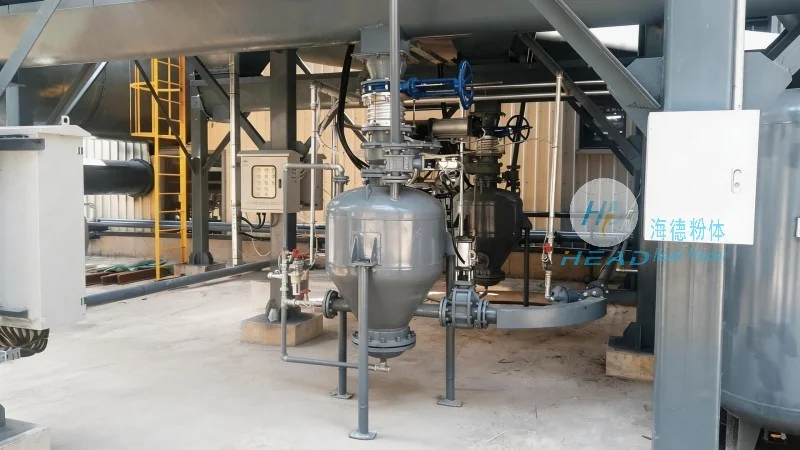
The potassium carbonate powder pneumatic conveying line is a specialized system engineered to transport potassium carbonate, a widely used chemical in industries such as glass manufacturing, pharmaceuticals, and chemical processing. This system combines advanced pneumatic technology with robust engineering to ensure the safe and efficient movement of the powder from storage to processing units. The design considers the unique properties of potassium carbonate, including its reactivity, moisture sensitivity, and flow characteristics, to maintain product integrity throughout the conveying process.
Key Components of the Pneumatic Conveying System
The pneumatic conveying line for potassium carbonate typically consists of several key components that work in tandem to achieve effective material transport. These include a hopper for material storage, a feeder to control the flow rate, a conveying pipeline, a blower or compressor to generate the necessary air pressure, and a receiver for the discharged material. Each component is carefully selected and integrated to ensure optimal performance and minimal product degradation.
Operation Process: Step-by-Step Guide
The operation of the potassium carbonate powder pneumatic conveying line follows a systematic process to ensure smooth and continuous material handling. The process begins with the loading of potassium carbonate into the storage hopper. The feeder then regulates the flow of the powder into the conveying pipeline, ensuring a consistent feed rate. The blower or compressor generates the required air pressure, which propels the powder particles through the pipeline using a combination of air velocity and particle momentum. As the powder travels through the system, it may pass through various sections, including bends, filters, or expansion chambers, which are designed to maintain the integrity of the material and prevent blockages. The material is then collected in the receiver, where it is discharged for further processing or storage.

Working Principle: How Pneumatic Conveying Works
The working principle of the potassium carbonate powder pneumatic conveying line is based on the fundamental concept of transporting solid particles using a gas stream. There are two primary modes of pneumatic conveying: positive pressure (or pressure) and negative pressure (or vacuum). In the case of the potassium carbonate system, a positive pressure system is commonly used, where the blower supplies compressed air to the conveying line, creating a pressure higher than the ambient air pressure. This pressure difference forces the potassium carbonate particles to move through the pipeline. The air and powder mixture travels at high velocity, allowing the particles to be suspended and transported efficiently. The system may also incorporate a cyclone separator or other filtration equipment to separate the powder from the air stream, ensuring that the discharged material is clean and free from contaminants.
Benefits and Applications of the System
The potassium carbonate powder pneumatic conveying line offers several advantages over traditional bulk handling methods, such as belt conveyors or manual handling. These benefits include improved safety by reducing human exposure to the powder, enhanced product quality by minimizing dust and contamination, and increased operational efficiency through automated control and reduced downtime. The system is particularly suitable for applications where the powder needs to be transported over long distances or through complex layouts, such as in large-scale chemical plants or glass manufacturing facilities. By leveraging the expertise of HeadPowder, industries can achieve reliable and cost-effective material handling solutions for their potassium carbonate processing needs.