

Introduction to Sodium Fluorosilicate Pneumatic Conveying System: Structure and Working Principle
The following article provides an overview of the sodium fluorosilicate pneumatic conveying system, detailing its structural design and operational principles. This system is engineered by Shandong HeadPowder Engineering Co., Ltd., a leading manufacturer based in China, specializing in advanced powder handling solutions.

About HeadPowder Engineering
Shandong HeadPowder Engineering Co., Ltd., commonly known as HeadPowder, is a professional company dedicated to the research, development, and production of pneumatic conveying systems. With a strong focus on innovation and quality, HeadPowder has established itself as a trusted partner in the chemical and powder processing industries. The company's headquarters is located in Shandong, China, where it leverages local expertise and resources to deliver reliable and efficient solutions for clients worldwide.
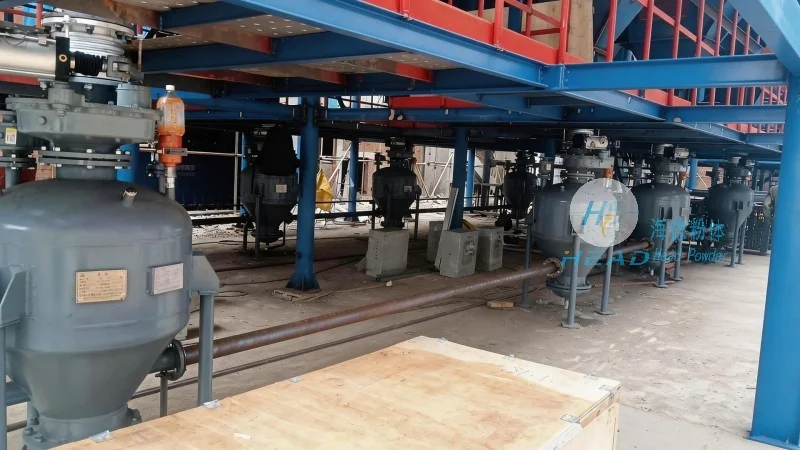
System Structure Overview
The sodium fluorosilicate pneumatic conveying system consists of several key components that work in tandem to ensure efficient material transport. The primary components include a hopper for material storage, a rotary valve for controlled discharge, a conveying pipeline, a blower or air compressor to generate the necessary airflow, and a dust collector or filter to manage airborne particles. Each component is designed to handle the specific characteristics of sodium fluorosilicate, such as its fine particle size and potential for dust generation, ensuring safe and effective operation.
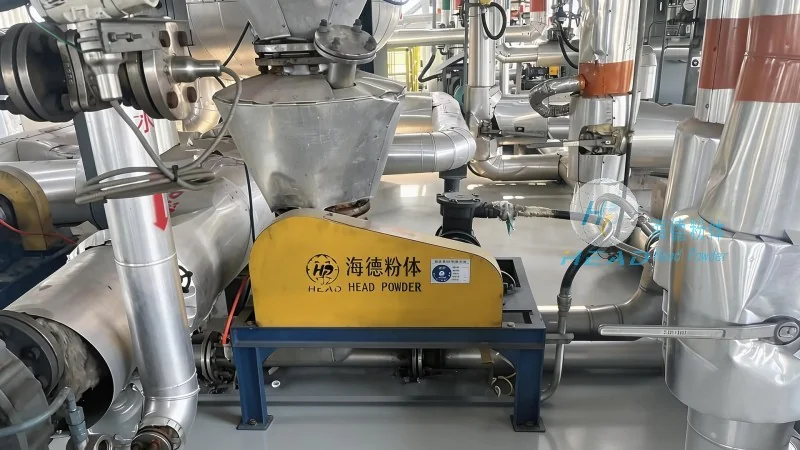
Working Principle of the Pneumatic Conveying System
The operation of the sodium fluorosilicate pneumatic conveying system is based on the principle of pneumatic transport, where material is suspended and transported by a stream of air. The process begins with the material being fed from the hopper into the conveying pipeline through the rotary valve. Simultaneously, the blower generates a high-pressure airflow that moves through the pipeline, creating a negative pressure zone that draws the material particles into the air stream. As the material is carried along the pipeline, it is continuously mixed with the air, maintaining a consistent suspension. The system is equipped with appropriate controls to regulate the airflow and material feed rate, ensuring stable and reliable transport. At the destination, the material is deposited into a receiving hopper or container, while the air is filtered and returned to the system or released safely.

Key Features and Advantages
HeadPowder's sodium fluorosilicate pneumatic conveying system offers several advantages that make it an ideal choice for industrial applications. The system is designed to minimize material degradation and loss, ensuring high recovery rates. It also reduces the risk of dust exposure and contamination, which is critical for handling sodium fluorosilicate, a chemical with potential health and safety considerations. The modular design allows for easy installation and maintenance, with components that can be replaced or upgraded as needed. Additionally, the system's energy efficiency and low operational costs contribute to its overall cost-effectiveness, making it a practical solution for businesses looking to optimize their powder handling processes.