

Introduction to Pneumatic Conveying Equipment for Calcium Hydroxide Powder: Structure and Working Pr
This document provides an overview of the pneumatic conveying equipment designed specifically for handling calcium hydroxide powder. As a key component in industrial processes, this equipment is engineered to efficiently transport the material from one location to another while maintaining its quality and integrity. The system is tailored to meet the unique characteristics of calcium hydroxide, such as its fine particle size and potential for dust generation, ensuring safe and reliable operation.

Key Components and Structure of the Pneumatic Conveying System
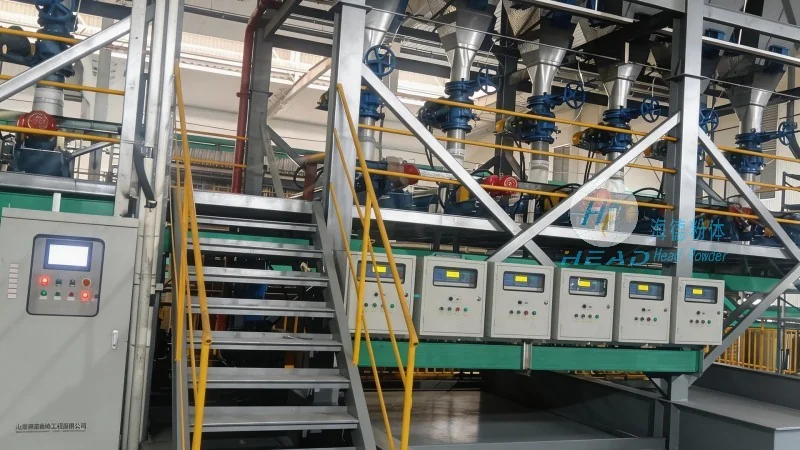
The pneumatic conveying equipment for calcium hydroxide powder typically consists of several critical components that work in concert to achieve effective material transport. The main structural elements include the hopper, which serves as the storage and feeding unit; the conveyor line, which may be of the dilute phase or dense phase type depending on the application; and the discharge unit, which delivers the material to the target destination. The system also incorporates a dust collection and filtration system to manage airborne particles and ensure environmental compliance.
Working Principle of the Pneumatic Conveying Process
The operation of the pneumatic conveying system for calcium hydroxide powder is based on the principle of using air or gas as the conveying medium. In the dilute phase system, air is introduced at a high velocity, creating a stream that entrains the powder particles and transports them through the pipeline. The dense phase system, on the other hand, uses lower air velocities and higher material concentrations, which results in a more controlled and gentle transport, minimizing particle degradation. The system is equipped with control valves and sensors to regulate the flow rate and pressure, ensuring optimal performance and preventing blockages or system failures.
Advantages of Using Pneumatic Conveying for Calcium Hydroxide Powder
Employing pneumatic conveying equipment for calcium hydroxide powder offers several advantages over traditional methods like belt conveyors or bucket elevators. The primary benefit is the ability to handle fine powders without the need for mechanical contact, which reduces the risk of product contamination and degradation. Additionally, the system provides a closed-loop operation, minimizing dust emissions and improving workplace safety. The flexibility of the system allows for easy integration with existing production lines and the ability to transport materials over long distances with minimal energy consumption. Furthermore, the equipment is designed for easy maintenance and cleaning, ensuring consistent performance and low downtime.
Application Scenarios and Industrial Use Cases
The pneumatic conveying equipment for calcium hydroxide powder is widely used in various industrial applications, including chemical manufacturing, food processing, and construction material production. In the chemical industry, it is used to transport raw materials to reactors and finished products to packaging lines. In food processing, the system ensures hygienic and dust-free transfer of calcium hydroxide, which is often used as a food additive or supplement. In construction, the equipment is employed to deliver the powder to mixing plants and concrete production sites, where it is used as a component in cement and mortar formulations. The versatility of the system makes it suitable for a wide range of applications where efficient and safe powder handling is essential.

Technical Specifications and Design Considerations
When designing the pneumatic conveying system for calcium hydroxide powder, several technical specifications and design considerations must be taken into account. The particle size distribution of the powder is a critical factor, as it affects the air velocity required for effective transport. The system's capacity and flow rate are determined based on the production rate and the distance between the source and destination. The material of construction for the components, such as the hopper and pipeline, must be resistant to corrosion and wear, as calcium hydroxide can be abrasive and reactive with certain materials. The system also incorporates safety features like pressure relief valves and emergency shut-off mechanisms to prevent accidents and ensure operator safety.
About Shandong HeadPowder Engineering Co., Ltd.
HeadPowder, the brand name of Shandong HeadPowder Engineering Co., Ltd., specializes in the design, manufacturing, and supply of advanced pneumatic conveying equipment. With a focus on innovation and quality, the company has established itself as a leading provider in the industry, serving clients across China and internationally. HeadPowder's facilities are located in Shandong, China, where the company leverages its expertise and state-of-the-art technology to develop customized solutions for diverse industrial needs. The company's commitment to customer satisfaction and product excellence has earned it a reputation for reliability and performance in the market.