

What is a Phosphate Iron Powder Pneumatic Conveying System? What are its Design Principles?
Phosphate iron powder, a critical material in various industrial applications, often requires efficient and reliable transport methods to ensure smooth production processes. The phosphate iron powder pneumatic conveying system emerges as a sophisticated solution designed to handle the unique characteristics of this powder, such as its fine particle size and potential for static charge accumulation. This system leverages air as the primary medium to transport the powder, offering advantages like reduced contamination, improved safety, and enhanced process control compared to traditional mechanical conveying methods. As a leading provider in the field, Shandong HeadPowder Engineering Co., Ltd. specializes in designing and manufacturing such systems tailored to the specific needs of industries dealing with phosphate iron powder.

Core Components of the Pneumatic Conveying System
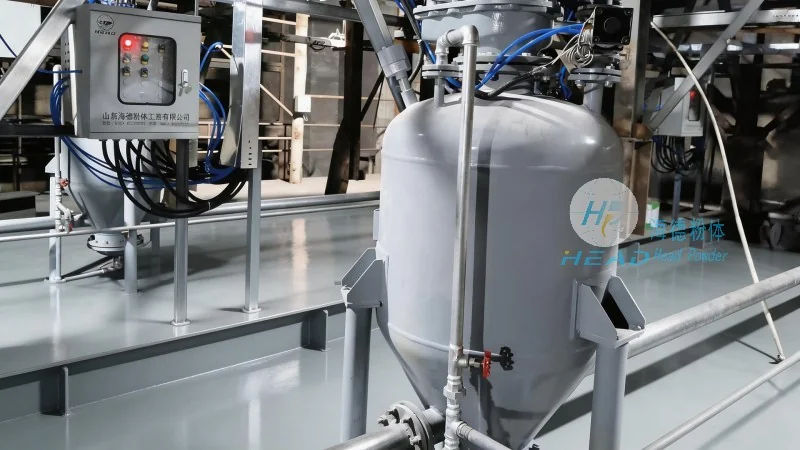
The phosphate iron powder pneumatic conveying system consists of several key components that work in tandem to achieve effective material transport. The primary components include a hopper or feeder for storing and metering the phosphate iron powder, a compressor or blower to generate the necessary air pressure, a pipeline network for conveying the powder-air mixture, and a receiver or discharge unit for delivering the material to its final destination. Each component plays a crucial role in maintaining the system's efficiency and reliability. For instance, the feeder ensures a consistent flow of powder into the system, preventing blockages or uneven material distribution. The compressor or blower provides the pressure differential required to move the powder through the pipeline, while the pipeline design—often featuring smooth, corrosion-resistant materials like stainless steel—minimizes friction and powder degradation. The receiver, equipped with proper filtration and dust collection systems, ensures that the phosphate iron powder is delivered in a clean and controlled manner, avoiding contamination from external sources.

Design Principles Underpinning the System
The design principles of the phosphate iron powder pneumatic conveying system are rooted in the fundamental physics of fluidization and particle transport. One of the core principles is the creation of a pressure differential between the feeding and receiving points, which drives the powder-air mixture through the pipeline. This differential is typically achieved by using a positive displacement blower or a centrifugal compressor, depending on the system's capacity and pressure requirements. The system's design also considers the particle size distribution and density of the phosphate iron powder, as these factors influence the air velocity needed to keep the powder suspended and prevent settling or clogging. Engineers often employ computational fluid dynamics (CFD) simulations to optimize the pipeline geometry, ensuring that the air velocity remains within the optimal range for conveying the powder without causing excessive wear or energy consumption. Additionally, the system incorporates features to manage static electricity, a common issue with fine powders like phosphate iron, through grounding and anti-static additives to prevent dust explosions and ensure safe operation.
Advantages of Using a Pneumatic Conveying System for Phosphate Iron Powder
Implementing a phosphate iron powder pneumatic conveying system offers several distinct advantages over traditional conveying methods. First, it significantly reduces the risk of product contamination, as the material is enclosed within the pipeline and protected from external pollutants. This is particularly critical for phosphate iron powder, which is often used in applications requiring high purity, such as battery manufacturing or chemical processing. Second, the system enhances operational safety by eliminating the need for manual handling of the powder, thereby minimizing exposure to dust and potential health hazards. Third, it provides precise control over the material flow rate and pressure, allowing for seamless integration with downstream processes like mixing, blending, or packaging. This control is essential for maintaining consistent product quality and reducing waste. Furthermore, the system is highly adaptable, capable of handling varying powder loads and distances, making it suitable for both small-scale laboratory applications and large-scale industrial production lines. The energy efficiency of pneumatic conveying, especially when optimized with proper pipeline design and air compression, also contributes to cost savings over time.

Application Scenarios and Industry Impact
The phosphate iron powder pneumatic conveying system finds widespread application across multiple industries, where the efficient transport of fine powders is essential. In the battery manufacturing sector, for example, phosphate iron powder is a key component in lithium-ion batteries, and the system ensures that the powder is delivered to the mixing and coating stages with minimal loss or degradation. Similarly, in the chemical and pharmaceutical industries, the system is used to transport phosphate iron powder for use in catalysts, fertilizers, or other specialty chemicals. The ability to maintain the powder's integrity and prevent agglomeration during transport is crucial in these applications, as any degradation can affect the final product's performance. The system's reliability and consistency also contribute to improved production throughput and reduced downtime, as operators can rely on the system to deliver a steady flow of material without interruptions. Overall, the adoption of a phosphate iron powder pneumatic conveying system reflects a commitment to modern, efficient, and safe industrial practices, aligning with the evolving needs of industries that rely on high-purity materials.