

Working Principle and Features of Continuous Quantitative Pneumatic Conveyors
Continuous quantitative pneumatic conveyors are a critical industrial equipment designed for efficient and precise bulk material transport. These systems are widely utilized across various sectors, including food processing, pharmaceuticals, and chemical manufacturing, where maintaining consistent material flow and product quality is paramount. The technology integrates pneumatic principles with advanced control mechanisms to deliver reliable performance in diverse operational environments.
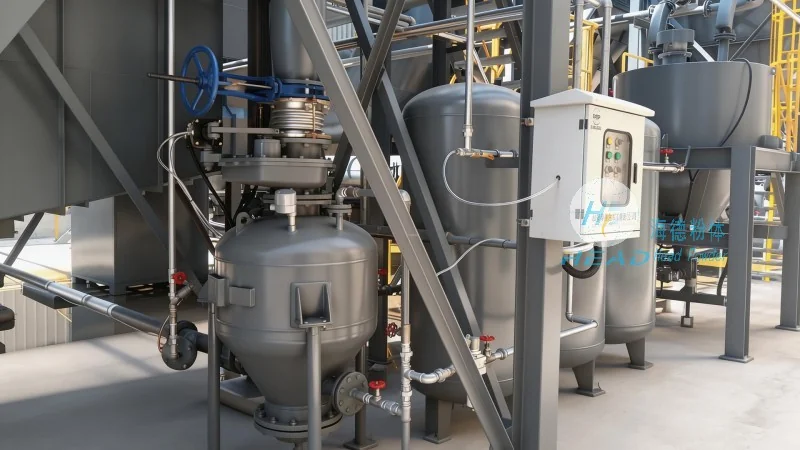
Working Principle of Continuous Quantitative Pneumatic Conveyors
The operation of a continuous quantitative pneumatic conveyor involves a systematic process that combines air flow with material handling. At its core, the system uses compressed air or gas to create a transport medium that moves bulk materials through a pipeline. The working principle can be broken down into key stages:
First, the material is introduced into the conveyor's inlet hopper. From there, it is drawn into the air stream by the pressure or suction generated by the air pump. The air and material mixture then travels through the pipeline to the discharge point. A critical control component is the air valve or regulator, which adjusts the air flow to maintain a steady material flow rate. This regulation ensures the conveyor delivers a continuous, precise quantity of material, avoiding intermittent bursts. The system may also include a filter or separator to remove air contaminants before material discharge, preserving product purity.
Key Features of Continuous Quantitative Pneumatic Conveyors
Continuous quantitative pneumatic conveyors offer several advantages that enhance their functionality and adaptability in industrial settings. These features contribute to operational efficiency, reliability, and cost-effectiveness.

One primary feature is the ability to handle a wide range of bulk materials, from fine powders to granules and small particles. The system's design accommodates diverse material types without significant modifications. Additionally, the conveyor provides a uniform, continuous flow of material, essential for processes like packaging or blending that require steady input.
Another notable feature is high efficiency and low maintenance. Unlike mechanical conveyors, pneumatic systems have fewer moving parts, reducing mechanical failure risks and maintenance needs. This lowers operational costs and increases equipment uptime. The system also offers excellent dust control, as material remains contained within the pipeline, preventing emissions and maintaining a cleaner workspace.

Furthermore, continuous quantitative pneumatic conveyors provide precise flow rate control. Advanced control systems, often integrated with the conveyor, allow operators to adjust air pressure or flow rate to achieve desired output. This level of control is vital in industries like pharmaceuticals, where material consistency and regulatory compliance are critical.
Applications and Benefits in Industrial Operations
The versatility and reliability of continuous quantitative pneumatic conveyors make them suitable for various industrial applications. In food processing facilities, these systems transport ingredients like flour, sugar, or spices with high precision, ensuring consistent product quality. In pharmaceutical manufacturing, they handle active pharmaceutical ingredients (APIs) and other sensitive materials, minimizing contamination risks.
In chemical plants, the conveyors are used for powders and granules in mixing, blending, or packaging processes. The ability to maintain consistent flow rates and control dust emissions makes them ideal for handling hazardous or reactive materials. Beyond efficiency, these systems enhance workplace safety by reducing manual material handling and minimizing airborne particle exposure.