

Working Principle and Features of PE Granule Pneumatic Conveying Systems
PE granule pneumatic conveying equipment is a specialized system designed for the efficient and reliable transport of polyethylene (PE) granules in industrial settings. Developed by Shandong HeadPowder Engineering Co., Ltd., a leading manufacturer based in Shandong, China, this equipment represents a sophisticated solution for material handling in various sectors, including plastics processing, chemical manufacturing, and food processing. The following sections will explore the working principle and key characteristics of these systems, providing a comprehensive understanding of their functionality and benefits.

Working Principle of PE Granule Pneumatic Conveying Systems
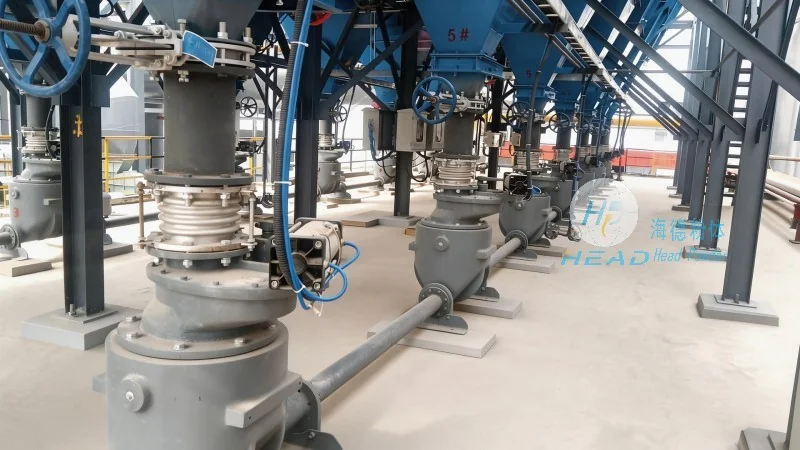
The core of PE granule pneumatic conveying systems lies in the use of air as the conveying medium to transport solid particles. The process typically involves a series of components, including a hopper for material storage, a rotary valve or feeder to control the flow of granules, a conveying line (often with bends and straight sections), and a receiver or collection tank. The system operates by creating a pressure differential between the hopper and the receiver. When the rotary valve opens, PE granules are released into the conveying line, and a high-velocity air stream is introduced. This air stream, generated by a blower or fan, propels the granules through the pipeline, overcoming gravitational forces and any resistance within the system. The air and granules travel together until they reach the receiver, where the air is typically filtered and the granules are collected. The working principle is based on the principle of fluidization, where the air flow creates a suspension of the granules, allowing them to be transported efficiently over long distances without the need for mechanical components like belts or buckets.

Key Features of PE Granule Pneumatic Conveyers
PE granule pneumatic conveyors from Shandong HeadPowder Engineering Co., Ltd. are engineered with several distinct features that enhance their performance and adaptability. One of the primary features is the ability to handle a wide range of PE granule sizes and densities, from fine powders to larger pellets, without clogging or loss of material. The system's design incorporates advanced materials and corrosion-resistant components to ensure durability and longevity, even in harsh industrial environments. Another notable feature is the flexibility in conveying distances, as pneumatic systems can transport materials over several hundred meters with minimal pressure loss. The equipment also offers high efficiency in terms of energy consumption, as the air flow can be optimized to match the material's characteristics, reducing waste and operational costs. Additionally, the system is designed for easy maintenance, with accessible components and simple operational controls that allow for quick troubleshooting and repairs. The integration of safety features, such as pressure relief valves and air filtration systems, ensures compliance with industrial safety standards and protects the equipment and personnel from potential hazards.
Technical Advantages and Applications
PE granule pneumatic conveying systems offer several technical advantages that make them a preferred choice for material handling in various industries. The primary advantage is the ability to transport materials in a closed system, which prevents contamination from external sources and minimizes dust emissions, making it suitable for applications where hygiene and environmental compliance are critical. The system's design also allows for the integration of additional processing steps, such as mixing or blending, directly within the conveying line, enhancing overall production efficiency. In terms of applications, these systems are widely used in the plastics industry for transporting PE granules from storage to processing equipment, in chemical plants for handling raw materials, and in food processing facilities for conveying food-grade PE products. The versatility of the system makes it adaptable to different production scales, from small-scale operations to large industrial plants, and can be customized to meet specific operational requirements, including varying material flow rates and conveying distances.

Conclusion
PE granule pneumatic conveying equipment, as developed by Shandong HeadPowder Engineering Co., Ltd., combines advanced engineering principles with practical design to provide an efficient and reliable solution for transporting PE granules. The working principle, based on air-based conveying, ensures high material throughput and minimal mechanical wear, while the key features, such as flexibility, durability, and safety, make it suitable for diverse industrial applications. By understanding the working principle and characteristics of these systems, industries can make informed decisions about adopting pneumatic conveying as a cost-effective and environmentally friendly material handling solution.