

Common Fine Sand Conveying Methods: Advantages and Features of HeadPowder's Pneumatic Conveying System
Fine sand, often defined as particles with a diameter less than 0.5 mm, presents unique challenges in material handling due to its fine texture and high dust generation potential. Traditional conveying methods like belt conveyors or screw conveyors may struggle with issues such as clogging, material degradation, and excessive dust exposure. To address these challenges, various specialized conveying technologies have emerged, each with distinct advantages and limitations. Understanding the different approaches to fine sand transport is crucial for selecting the most efficient and effective system for specific industrial applications.

Common Conveying Methods for Fine Sand
Several conventional and specialized methods are employed for transporting fine sand in industrial settings. The most widely used approaches include:

- Belt Conveyors: These systems use a continuous belt to move material along a fixed path. While effective for bulk materials, belt conveyors are prone to fine sand buildup on the belt surface, leading to reduced efficiency and increased maintenance requirements. The fine particles can also cause wear on the belt and idlers, shortening the equipment's service life.
- Screw Conveyors: Screw conveyors utilize a rotating screw to push material forward. However, fine sand can easily stick to the screw surface or the conveyor casing, resulting in clogging and operational disruptions. This method is generally less suitable for highly fine materials due to the risk of material degradation and increased energy consumption.
- Pneumatic Conveying (Air-Lift): This method uses compressed air to transport material through a pipeline. It offers advantages such as low maintenance, the ability to handle fine powders without clogging, and minimal material degradation. However, traditional air-lift systems may have limitations in terms of distance and material capacity.
HeadPowder's Pneumatic Conveying System: Key Advantages
Shandong HeadPowder Engineering Co., Ltd. (headpowder) has developed a specialized pneumatic conveying system tailored for fine sand applications. This system incorporates advanced design features that address the challenges associated with traditional conveying methods, ensuring efficient and reliable material transport. The key advantages of headpowder's system include:
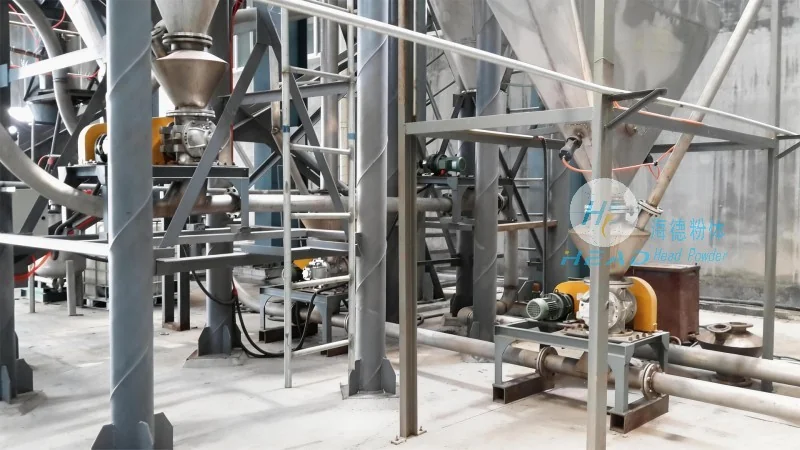
- Optimized Airflow and Pressure Control: The system employs precise airflow management and pressure regulation to maintain consistent material flow rates. This reduces the risk of clogging and ensures smooth operation over long distances.
- Low Material Degradation: The use of flexible hoses and controlled air pressure minimizes mechanical stress on the fine sand particles, preserving their integrity and preventing degradation during transport.
- Reduced Dust Exposure: Unlike open systems, the enclosed pipeline design significantly reduces dust emissions, enhancing workplace safety and compliance with environmental regulations.
- Scalability and Flexibility: The system can be easily scaled to accommodate varying production volumes and can be integrated with existing industrial setups, providing adaptability for different applications.
Technical Specifications and Performance
headpowder's fine sand pneumatic conveying system is engineered with robust components to ensure high performance and durability. Key technical specifications include:
- Conveying Capacity: The system can handle capacities ranging from 0.5 to 10 tons per hour, depending on the specific requirements of the application.
- Transport Distance: It is capable of transporting fine sand over distances up to 100 meters, with longer distances achievable through additional booster units.
- Pressure Range: The system operates within a pressure range of 0.5 to 1.5 bar, ensuring efficient material movement while minimizing energy consumption.
- Material Compatibility: The system is designed to handle a wide range of fine sand types, including silica sand, quartz sand, and other industrial fine powders, without causing corrosion or wear to the equipment.
Application Examples
The headpowder pneumatic conveying system has been successfully implemented in various industrial sectors, including:

- Construction Materials: Transporting fine sand for concrete production and mortar preparation, ensuring consistent material quality and reducing downtime.
- Mineral Processing: Conveying fine sand from mining operations to processing facilities, improving operational efficiency and reducing material loss.
- Chemical Manufacturing: Handling fine sand in chemical processes, where material purity and contamination control are critical.
Conclusion
When selecting a fine sand conveying system, it is essential to consider factors such as material characteristics, transport distance, and operational requirements. headpowder's pneumatic conveying system offers a reliable and efficient solution that addresses the unique challenges of fine sand transport. By leveraging advanced technology and engineering expertise, headpowder provides industrial clients with a high-performance system that enhances productivity, reduces maintenance costs, and ensures compliance with safety and environmental standards. For businesses seeking to optimize their fine sand handling processes, headpowder's system represents a superior choice in the market.