

Operation Process and Working Principle of Calcined Gypsum Powder Conveying System
Shandong HeadPowder Engineering Co., Ltd., commonly known as headpowder, is a professional manufacturer and supplier specializing in powder conveying systems. The company is based in Shandong, China, and has been committed to providing high-quality and efficient solutions for the transportation of calcined gypsum powder. This article will introduce the operation process and working principle of the calcined gypsum powder conveying system, highlighting the key components and functional mechanisms that ensure reliable and stable performance.
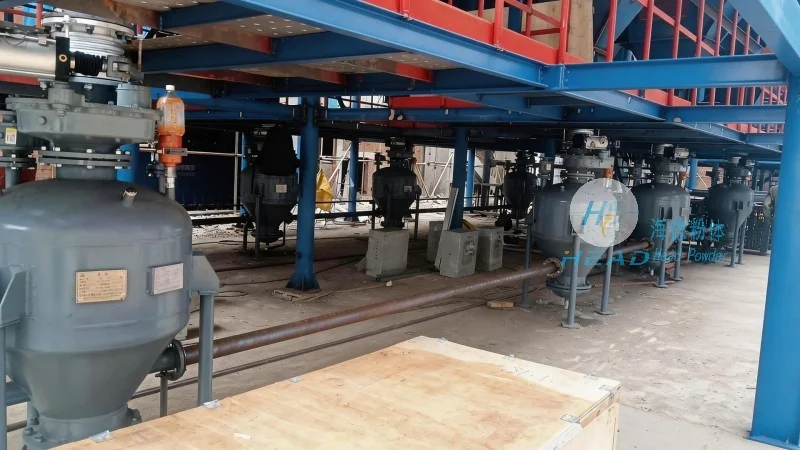
The calcined gypsum powder conveying system is a critical equipment in many industrial applications, particularly in the construction and building materials industry. It is designed to handle the transportation of calcined gypsum powder from storage silos or production lines to processing or packaging units. The system is engineered to meet the specific requirements of the industry, ensuring minimal dust generation, high efficiency, and durability under various operating conditions.
Product Introduction
The calcined gypsum powder conveying system offered by headpowder is a comprehensive solution that integrates advanced technology and robust construction. The system is equipped with components such as screw conveyors, pneumatic conveying units, and control panels, all designed to work in harmony to achieve optimal performance. The system is capable of handling different particle sizes and flow rates, making it suitable for a wide range of applications. The key product features include high conveying capacity, low energy consumption, and easy maintenance, which contribute to its cost-effectiveness and long service life.

Operation Process
The operation of the calcined gypsum powder conveying system typically involves several steps. First, the calcined gypsum powder is fed into the system from the storage silo or hopper. The powder is then transported through the conveying pipeline using either mechanical or pneumatic methods. The system is equipped with a control panel that allows operators to monitor and adjust the conveying speed and pressure as needed. The powder is then discharged into the next processing unit or packaging machine. The entire process is automated to ensure smooth and continuous operation, minimizing downtime and maximizing productivity.
Working Principle
The working principle of the calcined gypsum powder conveying system is based on the principles of fluidization and pneumatic transport. The system uses a combination of air and mechanical forces to move the powder through the conveying pipeline. The powder is first fed into the conveying unit, where it is mixed with air to form a slurry. The slurry is then transported through the pipeline under pressure, and the air is separated from the powder at the discharge point. The control system regulates the air flow and pressure to maintain the optimal conveying conditions. The system is designed to prevent dust accumulation and ensure that the powder is conveyed efficiently and safely.
Key Components and Functional Mechanisms
The calcined gypsum powder conveying system consists of several key components, each playing a crucial role in the overall operation. The main components include the feeding hopper, the conveying pipeline, the air compressor or blower, the control panel, and the discharge unit. The feeding hopper is responsible for storing and feeding the calcined gypsum powder into the system. The conveying pipeline is made of high-quality materials, such as stainless steel or plastic, to prevent corrosion and ensure durability. The air compressor or blower provides the necessary air pressure to move the powder through the pipeline. The control panel allows operators to monitor and control the system parameters, such as air pressure, conveying speed, and temperature. The discharge unit is responsible for releasing the powder into the next processing unit or packaging machine.

Advantages and Applications
The calcined gypsum powder conveying system offered by headpowder has several advantages that make it an ideal choice for various industrial applications. The system is highly efficient, with a high conveying capacity and low energy consumption. It is also durable and easy to maintain, which reduces the overall operating costs. The system is suitable for a wide range of applications, including the construction industry, where calcined gypsum is used as a raw material for plaster and other building materials. It is also used in the pharmaceutical and food industries, where the powder needs to be transported in a clean and hygienic environment.
Conclusion: The calcined gypsum powder conveying system is a vital equipment in many industrial processes, and the one offered by Shandong HeadPowder Engineering Co., Ltd. is a reliable and efficient solution. The system is designed to meet the specific requirements of the industry, ensuring minimal dust generation, high efficiency, and durability. The operation process and working principle of the system are well-defined and easy to understand, making it suitable for both new and experienced operators. With its advanced technology and robust construction, the system is a cost-effective and long-lasting solution for the transportation of calcined gypsum powder.