

Operation Process and Working Principle of Organic Salt Powder Pneumatic Conveying Line
The organic salt powder pneumatic conveying line is a sophisticated industrial system designed to transport organic salt powders efficiently and safely. This technology is crucial in various industries where handling fine powders is essential, such as chemical manufacturing, food processing, and pharmaceuticals. The system leverages pneumatic principles to move materials through a network of pipes, ensuring minimal product degradation and optimal operational efficiency.

Company Profile: Shandong HeadPowder Engineering Co., Ltd.
At the heart of this advanced technology is Shandong HeadPowder Engineering Co., Ltd., a leading manufacturer and supplier of pneumatic conveying solutions. HeadPowder, as the company is commonly known, has established itself as a trusted partner in the industry, specializing in the design, development, and implementation of customized powder handling systems. With a strong presence in China, particularly in Shandong, the company leverages its expertise to deliver high-quality, reliable equipment tailored to the unique needs of each client.
Key Components and Their Roles in the System
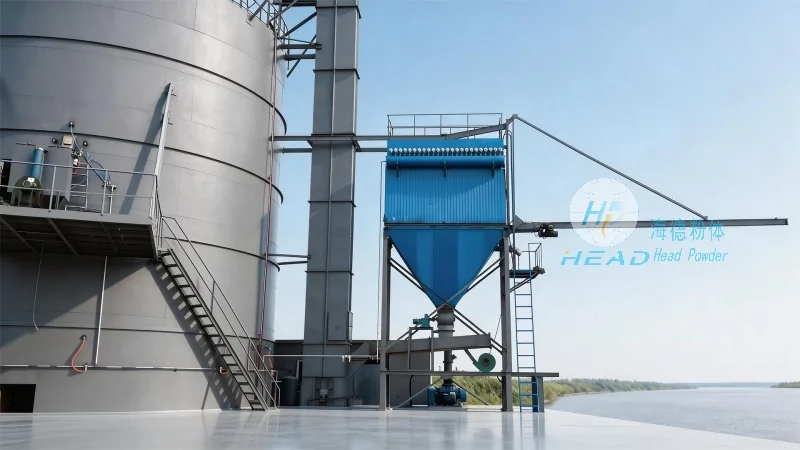
The organic salt powder pneumatic conveying line comprises several critical components, each playing a vital role in the overall operation. The primary components include the hopper for material storage, the air compressor that generates the necessary pressure, the conveying line itself (a network of pipes), and the receiver where the material is deposited. Additionally, the system may incorporate accessories like filters to maintain air quality, check valves to prevent backflow, and control valves to regulate flow rates. Each component is meticulously designed to ensure seamless integration and optimal performance.

Detailed Operation Process of the Pneumatic Conveying Line
The operation of the organic salt powder pneumatic conveying line begins with the material being fed into the hopper. The air compressor then starts, generating a flow of air that creates a pressure differential within the system. As the air moves through the conveying line, it draws the organic salt powder from the hopper and transports it to the receiver. The process is continuous, with the air flow maintaining the material in suspension, preventing clogging and ensuring a steady flow. The receiver collects the material, which can then be discharged for further processing or storage.
Working Principle Explained: How the System Transfers Organic Salt Powders
The working principle of the organic salt powder pneumatic conveying line is based on the fundamental concept of pneumatic transport. By using compressed air, the system creates a flow that carries the powder particles through the pipes. The key is maintaining the powder in a suspended state, which is achieved by controlling the air velocity and pressure. If the air velocity is too low, the powder may settle and cause blockages; if it is too high, it can lead to excessive wear on the system components. Therefore, precise control of these parameters is essential for efficient and safe operation. The system also employs various techniques, such as pulse or continuous air flow, to optimize the conveying process and minimize energy consumption.

Benefits and Applications of This Conveying Technology
The organic salt powder pneumatic conveying line offers numerous benefits, making it a preferred choice for many industries. One of the primary advantages is the ability to transport materials over long distances without the need for mechanical components like belts or buckets. This reduces maintenance costs and increases operational reliability. Additionally, the system is highly flexible, allowing for changes in the conveying route or capacity without significant modifications. The technology also ensures minimal product contamination, as the material is not in direct contact with metal surfaces, and it can handle a wide range of particle sizes and moisture contents. Applications include the transport of organic salts in chemical plants, food additives in food processing facilities, and pharmaceutical powders in pharmaceutical manufacturing, among others.