

Operation Process and Working Principle of Pneumatic Conveying for Dry Yeast Materials
HeadPowder Engineering, a leading company in the field, specializes in the design and implementation of pneumatic conveying systems tailored for dry yeast materials. This article provides an in-depth look at the operational process and underlying principles of such systems, highlighting the efficiency and reliability they offer in material handling applications.

Company Overview
HeadPowder, formally known as Shandong HeadPowder Engineering Co., Ltd., is headquartered in Shandong, China. With a strong focus on engineering excellence and customer-centric solutions, the company has established itself as a trusted provider of pneumatic conveying technologies for various industrial sectors, including food processing and biotechnology.
Understanding Pneumatic Conveying
Pneumatic conveying is a method of transporting bulk materials through a pipeline using air or other gases as the conveying medium. In the context of dry yeast, this technology enables the efficient movement of the material from storage to processing units without the need for mechanical components like belts or buckets. The process relies on the creation of a pressure differential within the pipeline, which propels the dry yeast particles along the system.

Key Components of a Pneumatic Conveying System
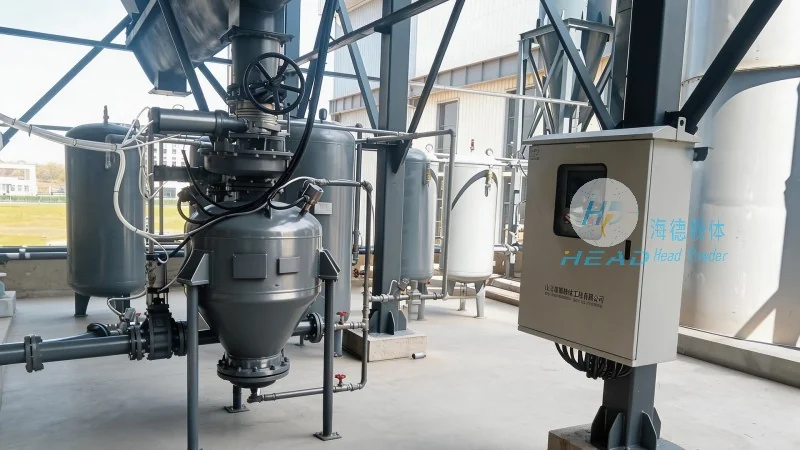
A typical pneumatic conveying system for dry yeast consists of several critical components. These include a hopper or feeder to introduce the dry yeast into the system, a venturi or airlock to control the flow rate, a pipeline network to transport the material, and a receiver or discharge unit to collect the material at the destination. Each component plays a vital role in ensuring the smooth and efficient operation of the entire system.
The Operational Process
The operation of a pneumatic conveying system for dry yeast begins with the loading of the material into the hopper. The feeder then regulates the flow of dry yeast into the pipeline, ensuring a consistent feed rate. Simultaneously, the system generates a pressure differential by introducing air or gas into the pipeline. This pressure difference propels the dry yeast particles forward, moving them through the pipeline to the receiver. The receiver then collects the dry yeast, completing the conveying process.

Working Principle: Pressure and Flow Dynamics
The core principle behind pneumatic conveying is the interaction between pressure and flow. The system creates a high-pressure zone at the inlet and a lower pressure zone at the outlet, creating a pressure gradient that drives the material. The velocity of the air or gas is carefully controlled to ensure that the dry yeast particles are entrained and transported without causing excessive wear or degradation. This balance of pressure and velocity is crucial for maintaining the quality of the dry yeast and the longevity of the system components.
Advantages of Pneumatic Conveying for Dry Yeast
Implementing pneumatic conveying for dry yeast offers several advantages over traditional mechanical methods. These include reduced risk of contamination, as the system is enclosed and sealed, preventing exposure to external elements. Additionally, the process is highly efficient, with minimal material loss and lower energy consumption compared to other methods. The ability to handle fine or delicate materials like dry yeast without causing breakage or degradation further enhances the appeal of this technology.
Application in Industrial Settings
In industrial settings, pneumatic conveying systems for dry yeast are commonly used in food processing plants, breweries, and biotechnology facilities. These systems are integrated into production lines to transport dry yeast from storage silos to fermentation tanks or other processing equipment. The reliability and efficiency of the system ensure that production processes run smoothly, with minimal downtime and consistent material quality.