

Operation Process and Working Principle of a Calcium Oxide Material Pneumatic Conveying System
Shandong HeadPowder Engineering Co., Ltd., commonly known as headpowder, specializes in the design, manufacturing, and installation of advanced pneumatic conveying systems tailored for various industrial applications. Among their core offerings is the calcium oxide material pneumatic conveying system, which efficiently handles the transportation of calcium oxide (CaO) from storage to processing units. This system is engineered to meet the specific demands of industries such as chemical processing, cement production, and mineral processing, ensuring reliable and safe material handling.

Key Features and Technical Specifications
The calcium oxide pneumatic conveying system by headpowder incorporates several key features that enhance its performance and reliability. The system utilizes a combination of positive and negative pressure conveying methods, depending on the application requirements. It is equipped with high-efficiency dust collectors to minimize environmental impact and ensure compliance with industrial regulations. The material handling capacity can be customized to accommodate varying flow rates, from low to high throughput, and the system is designed to handle calcium oxide with different particle sizes and moisture content. Additionally, the system incorporates advanced control systems that allow for real-time monitoring and adjustment of conveying parameters, ensuring optimal operation and preventing equipment damage.
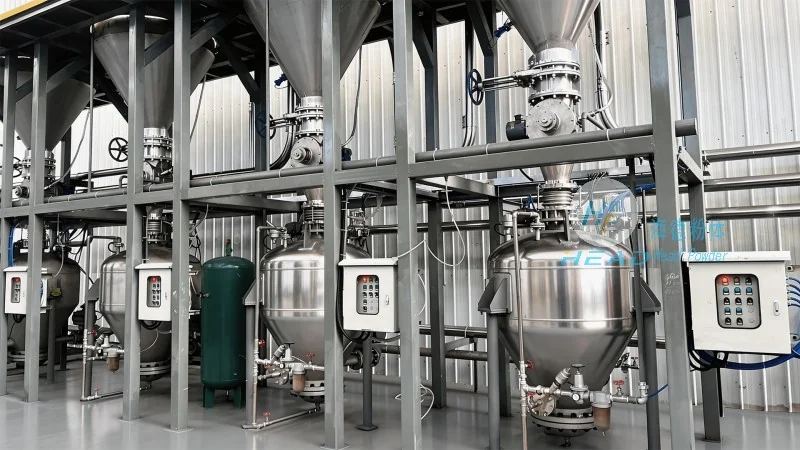
Working Principle of the Pneumatic Conveying System
The operation of the calcium oxide pneumatic conveying system is based on the principle of pneumatic transport, where material is conveyed through a pipeline using a carrier gas, typically air. The system consists of several key components, including a material feeder, a conveying pipeline, a dust collector, and a control unit. The process begins with the material being fed into the system from a storage silo or hopper. The feeder then meters the material into the conveying pipeline, where it is mixed with the carrier air. The air velocity is maintained at a level sufficient to keep the material suspended and transported through the pipeline. The system uses either positive pressure (blowing air into the pipeline) or negative pressure (sucking air out of the pipeline) to move the material. Positive pressure systems are often used for short-distance conveying, while negative pressure systems are preferred for longer distances or when handling dust-sensitive materials. The dust collector at the end of the pipeline captures any fine particles, preventing them from being released into the environment and ensuring clean operation.

Operation Process of the System
The operation of the calcium oxide pneumatic conveying system follows a systematic process to ensure efficient and safe material transport. First, the system is started by activating the control unit, which initiates the flow of carrier air. The material feeder then begins to discharge calcium oxide into the conveying pipeline. The air velocity is adjusted to maintain the material in a suspended state, preventing blockages and ensuring smooth transport. The conveying pipeline is designed with appropriate bends and elbows to accommodate the material's trajectory without causing excessive pressure drops or material degradation. At the receiving end, the material is deposited into a processing unit or storage vessel. The dust collector continuously operates to capture any particles that may escape from the system, ensuring that the exhaust air is clean and compliant with environmental standards. The control system monitors key parameters such as pressure, flow rate, and material level, providing alerts if any deviations occur. This allows for immediate intervention to prevent system failures or material loss. The system can be operated continuously or intermittently, depending on the production schedule, and is designed to be easily maintained and serviced, with accessible components and clear operational indicators.

Advantages and Applications
The calcium oxide pneumatic conveying system offers several advantages over traditional material handling methods, such as belt conveyors or bucket elevators. It provides a dust-free and enclosed transport environment, reducing the risk of material contamination and improving workplace safety. The system is also highly flexible, allowing for changes in conveying distance or material flow rate without major modifications. It is particularly suitable for handling calcium oxide, which is a fine, dusty material that can be difficult to transport using conventional methods. The system is widely used in industries where calcium oxide is a key raw material, including the production of cement, lime, and other chemical products. It enables efficient and reliable transport of the material from storage to processing units, improving overall production efficiency and reducing downtime.