

Several Solutions for the Pneumatic Conveying of Sodium Sulfate Powder
HeadPowder, a leading enterprise in the field of powder handling technology, specializes in providing efficient and reliable solutions for the pneumatic conveying of sodium sulfate powder. With years of experience and expertise, the company has developed several effective methods to ensure smooth and safe transportation of this critical industrial material.
Introduction to Sodium Sulfate Powder and Pneumatic Conveying
Sodium sulfate, commonly known as Glauber's salt or mirabilite, is a white crystalline solid widely used in various industries such as glass manufacturing, paper production, and chemical processing. Its fine powder form requires specialized handling techniques to prevent dust accumulation and ensure consistent quality. Pneumatic conveying, which uses air to transport bulk materials, is an ideal solution for sodium sulfate powder due to its ability to handle fine particles and minimize environmental impact.
Key Challenges in Sodium Sulfate Powder Conveying
Conveying sodium sulfate powder comes with several challenges that must be addressed to maintain product integrity and operational efficiency. One major issue is the tendency of fine powders to agglomerate or clog pipelines, leading to reduced throughput and increased maintenance costs. Another challenge is the risk of dust generation, which poses health and safety hazards for workers and can affect the quality of the final product. Additionally, the need for consistent flow rates and pressure control is crucial to avoid system inefficiencies and equipment damage.
Several Effective Pneumatic Conveying Solutions
HeadPowder offers multiple solutions tailored to the specific needs of clients handling sodium sulfate powder. These solutions are designed to overcome the challenges mentioned above and provide a reliable, cost-effective method of material transport.
1. Dilute Phase Pneumatic Conveying System
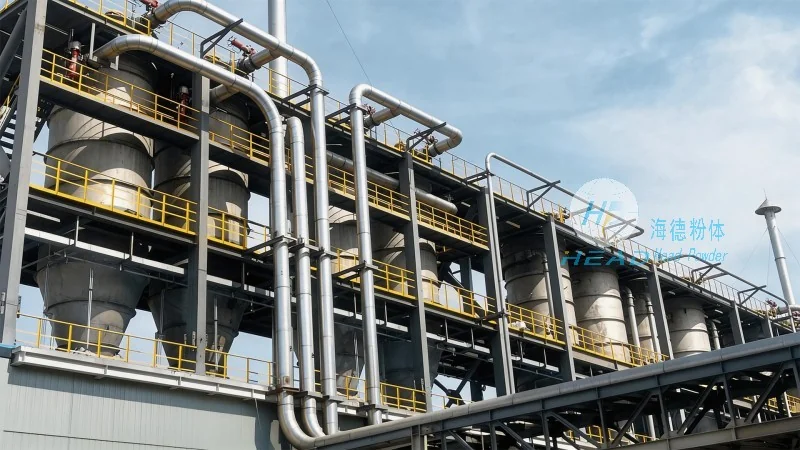
The dilute phase system is a common and efficient method for transporting sodium sulfate powder over moderate distances. In this system, the powder is mixed with a high volume of air at a low concentration, typically around 1-5% solids by weight. The air-powder mixture is then transported through a pipeline using a positive pressure or negative pressure system. This method is suitable for applications where the powder needs to be conveyed over short to medium distances, such as within a factory or between adjacent facilities. The dilute phase system is known for its low energy consumption and ability to handle fine particles without clogging the pipeline. However, it may not be suitable for long-distance transportation due to the higher air volume required.
2. Dense Phase Pneumatic Conveying System
For longer distances or when higher pressure is needed, the dense phase system is a more appropriate choice. In this system, the powder is mixed with a lower volume of air at a higher concentration, typically around 10-20% solids by weight. The air-powder mixture is then transported through a pipeline using a positive pressure system, often with a pulse or valve to control the flow. The dense phase system provides a more stable and consistent flow rate, reducing the risk of clogging and ensuring reliable delivery of the material. This method is ideal for applications requiring precise control over the conveying process, such as in pharmaceutical or food processing industries where product purity is critical. The dense phase system also offers better control over pressure and flow, making it suitable for handling sensitive materials like sodium sulfate powder.
3. Hybrid Pneumatic Conveying System
HeadPowder also offers hybrid systems that combine the advantages of both dilute and dense phase methods. These systems use a combination of low and high air volumes to optimize the conveying process based on the specific requirements of the application. For example, a hybrid system may use a dilute phase for the initial transport and then switch to a dense phase for the final delivery to a storage or processing unit. This approach allows for flexibility in handling different distances and flow rates, making it suitable for complex industrial setups. The hybrid system is particularly effective for applications where the distance varies or where the material needs to be transported to multiple destinations. By integrating both phases, the hybrid system provides a more efficient and cost-effective solution compared to using a single method alone.

4. Vacuum Pneumatic Conveying System
Vacuum pneumatic conveying is another option for transporting sodium sulfate powder, especially when the material needs to be moved from a lower elevation to a higher one or when the source is located in a confined space. In this system, a vacuum is created at the receiving end, drawing the powder and air mixture through the pipeline. The vacuum system is ideal for applications where the material is to be collected from a hopper or a storage bin and transported to a processing unit. It offers a gentle and controlled method of conveying, minimizing the risk of product degradation or damage. The vacuum system is also suitable for handling powders that are sensitive to pressure changes or that may be prone to caking. However, it may have lower conveying capacity compared to positive pressure systems and may require more energy to maintain the vacuum.
Advantages of HeadPowder's Solutions
All the pneumatic conveying solutions offered by HeadPowder, including the dilute, dense, hybrid, and vacuum systems, come with several advantages that make them ideal for sodium sulfate powder handling. These advantages include:
- Efficient Material Transport: The systems are designed to maximize the conveying efficiency, ensuring high throughput and minimal downtime.
- Product Integrity Preservation: The gentle handling and controlled flow rates help maintain the quality and purity of the sodium sulfate powder, preventing agglomeration or degradation.
- Environmental Protection: The enclosed pipeline system reduces dust generation and minimizes the environmental impact, ensuring compliance with safety regulations.
- Customizable Solutions: HeadPowder provides tailored solutions based on the specific needs of each client, including the distance, flow rate, and material characteristics.
- Low Maintenance and Longevity: The systems are built with high-quality materials and components, ensuring long-term reliability and reduced maintenance costs.
Conclusion
HeadPowder Engineering Co., Ltd., based in Shandong, China, is a trusted provider of pneumatic conveying solutions for sodium sulfate powder. By offering a range of effective methods, including dilute, dense, hybrid, and vacuum systems, the company ensures that clients can choose the most suitable solution for their specific applications. With its expertise and commitment to quality, HeadPowder helps industries maintain efficient and safe transportation of sodium sulfate powder, contributing to improved productivity and product quality.