

Design Considerations for a Protein Powder Pneumatic Conveying System
When designing a protein powder pneumatic conveying system, several key factors must be considered to ensure efficiency, reliability, and compliance with industry standards. This document outlines the essential design considerations for such systems, tailored for applications involving protein powders, which are sensitive materials requiring careful handling.

Company Overview: Shandong HeadPowder Engineering Co., Ltd.
HeadPowder, a leading engineering firm based in Shandong, China, specializes in the design and implementation of advanced pneumatic conveying solutions. With a focus on precision and durability, the company has built a reputation for delivering systems that meet the stringent requirements of the food and pharmaceutical industries. Their expertise lies in creating customized solutions that optimize material flow while maintaining product integrity.
Key Design Considerations for Pneumatic Conveying Systems
The success of a protein powder pneumatic conveying system hinges on meticulous planning across multiple aspects. First, the system must be designed to handle the unique properties of protein powders, such as their fine particle size and hygroscopic nature. This involves selecting appropriate equipment, including high-efficiency cyclones and dust collectors, to prevent product degradation and ensure clean operation. Additionally, the system’s layout must consider the need for gentle handling to avoid agglomeration or loss of nutritional value.
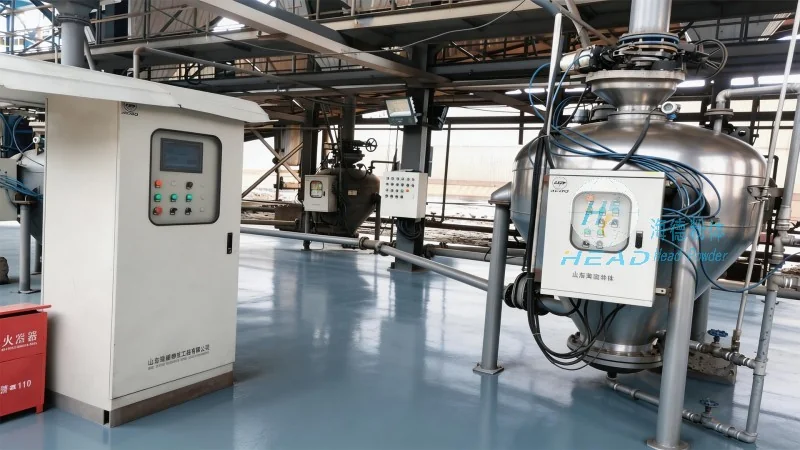
Material Selection and Equipment Integration
Choosing the right materials for construction is critical in a protein powder conveying system. Components like hoppers, pipelines, and valves should be made from food-grade materials, such as stainless steel, to prevent contamination and ensure easy cleaning. The system’s design also integrates advanced control mechanisms, allowing for precise regulation of air flow and pressure, which directly impacts the conveying efficiency and product quality. For instance, variable frequency drives (VFDs) can adjust air velocity to match the specific characteristics of the protein powder being transported.
System Performance and Efficiency Optimization
Optimizing the performance of a pneumatic conveying system involves balancing several variables. The system must achieve sufficient conveying velocity to prevent particle deposition while minimizing energy consumption. This requires careful calculation of air volume and pressure based on the powder’s density and flow characteristics. Furthermore, the integration of monitoring tools, such as pressure sensors and flow meters, enables real-time adjustments to maintain optimal operation. Such measures not only enhance efficiency but also extend the lifespan of the equipment by reducing wear and tear.

Compliance with Industry Standards and Regulations
Designing a protein powder pneumatic conveying system must adhere to strict industry regulations, particularly those related to food safety and hygiene. The system’s components must meet standards like FDA and GMP requirements, ensuring that the protein powder remains free from contaminants throughout the conveying process. This includes implementing proper sealing mechanisms to prevent cross-contamination and maintaining a clean environment in the processing area. HeadPowder’s expertise in regulatory compliance ensures that their systems are not only effective but also compliant with global standards.

Customization and Scalability for Diverse Applications
Protein powder applications vary widely, from small-scale production to large industrial operations. Therefore, the pneumatic conveying system must be designed with scalability in mind. This allows for easy expansion as production needs grow, without requiring a complete overhaul of the existing infrastructure. Customization is also key, as different protein powders may have distinct handling requirements. For example, systems for whey protein versus soy protein may differ in terms of air flow rates and particle size considerations. HeadPowder’s approach to customization ensures that each system is tailored to the specific needs of the client, maximizing both performance and cost-effectiveness.
Conclusion: Ensuring Excellence in Protein Powder Handling
Designing a protein powder pneumatic conveying system is a complex process that requires a deep understanding of both the material properties and the operational environment. By focusing on key design considerations, material selection, performance optimization, and regulatory compliance, companies can achieve efficient and reliable systems that preserve the quality of their protein powders. Shandong HeadPowder Engineering Co., Ltd. stands as a trusted partner in this endeavor, providing expert solutions that meet the highest standards of the industry.