

What is a Ternary Material Material Handling System? What Are Its Design Principles?
For industrial operations dealing with ternary materials, an efficient material handling system is crucial for maintaining productivity and ensuring safety. This article explores the concept of a ternary material material handling system, detailing its design principles and the key components that make it effective.

Understanding Ternary Material Material Handling Systems
A ternary material material handling system is a specialized setup designed to transport, store, and manage materials composed of three distinct components. These materials are commonly found in battery manufacturing, where they include cathode active materials like lithium nickel manganese cobalt oxide (NMC), lithium iron phosphate (LFP), or other advanced chemistries. The system must accommodate the unique physical and chemical properties of these materials, such as their fine particle size, reactivity, and sensitivity to moisture or contamination.
Key Design Principles for Ternary Material Handling
The design of a ternary material material handling system follows several critical principles to ensure optimal performance and safety. First, it emphasizes containment and dust control, as ternary materials are often powders that can generate fine dust, which is hazardous if inhaled. The system typically incorporates sealed hoppers, enclosed conveyor belts, and dust collection systems to minimize exposure. Second, it prioritizes material flow efficiency, using gravity-fed or mechanical conveyors to move materials with minimal energy consumption and minimal risk of agglomeration or segregation. Third, it incorporates robust material handling equipment, such as high-capacity feeders and precision weighers, to ensure accurate dosing and mixing of the three components. Fourth, it adheres to strict hygiene and cleanliness standards, as contamination can significantly affect the performance of the final product. Finally, it integrates automation and monitoring systems to track material inventory, detect anomalies, and maintain consistent quality.
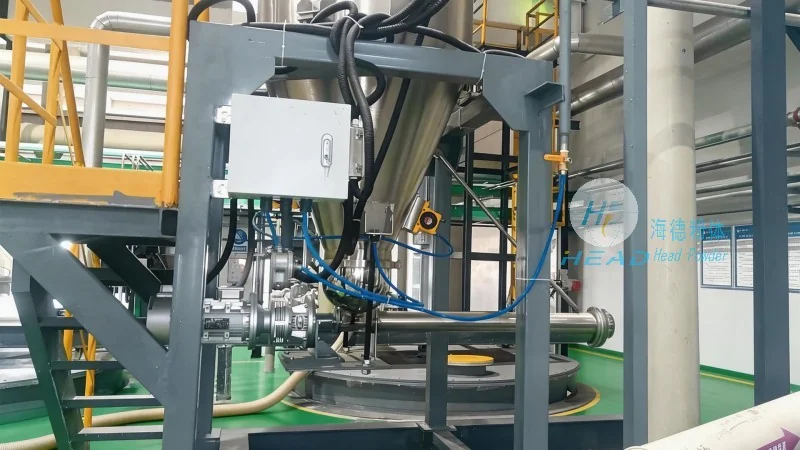
Components of a Ternary Material Material Handling System
The core components of a ternary material material handling system include feed hoppers, which store the individual ternary components (e.g., nickel, manganese, cobalt powders), and a distribution system that feeds these components into a mixing or blending unit. The system may also feature a pre-drying or dehumidification stage to control moisture content, as moisture can degrade the material's properties. Conveying equipment, such as screw conveyors or pneumatic transport systems, moves the materials from the hoppers to the processing area. For precise control, the system includes feeders that regulate the flow rate of each component, ensuring the correct stoichiometric ratio is maintained. A blending or mixing chamber then combines the components, often using high-shear mixers or planetary mixers to achieve uniform distribution. Finally, the system may include a discharge system, such as a discharge bin or a loading system for downstream processing, to deliver the blended material to the next stage of production.

Applications and Benefits of Ternary Material Handling Systems
Ternary material material handling systems are widely used in the battery manufacturing industry, particularly for producing lithium-ion batteries. They are also applicable in other sectors, such as aerospace and electronics, where ternary materials are used for advanced components. The benefits of these systems include improved material utilization, reduced waste, enhanced product quality, and increased operational efficiency. By maintaining consistent material flow and composition, the system minimizes the risk of batch-to-batch variations, which is critical for meeting stringent quality standards. Additionally, the enclosed design and dust control measures protect workers from exposure to hazardous materials, ensuring a safe working environment. The integration of automation and monitoring further enhances process control, allowing for real-time adjustments and data-driven decision-making.
Conclusion
In summary, a ternary material material handling system is a sophisticated and essential component of modern industrial operations, particularly in the battery industry. Its design principles focus on safety, efficiency, and precision, ensuring that ternary materials are handled and processed effectively. Companies like Shandong HeadPowder Engineering Co., Ltd. specialize in designing and manufacturing such systems, providing tailored solutions that meet the specific needs of their clients. By investing in a well-designed material handling system, businesses can enhance their productivity, improve product quality, and maintain a safe working environment.