

Phenolic Powder Material Pneumatic Conveying: Understanding the Process and Design Principles
Phenolic powder, a widely used industrial material in sectors such as electronics, automotive, and construction, often requires efficient and safe material handling solutions. Pneumatic conveying stands out as a key technology for transporting phenolic powders, offering advantages like dust-free operation, reduced contamination, and flexibility in system layout. This article explores the fundamentals of phenolic powder material pneumatic conveying and delves into the core design principles that ensure optimal performance and reliability.

Introduction to Phenolic Powder Pneumatic Conveying
Pneumatic conveying systems utilize air or gas to transport bulk materials like phenolic powders through a network of pipes. Unlike mechanical systems, which rely on belts or screws, pneumatic conveyors use pressure differentials to move materials, making them particularly suitable for powders that are prone to caking or require gentle handling. The process involves generating a flow of air that entrains the powder particles, carrying them from the source to the destination. This method is especially beneficial for phenolic powders due to their fine particle size and potential for dust explosion hazards, as it minimizes the risk of static buildup and provides a controlled environment for material transport.
About HeadPowder: Your Expert in Pneumatic Conveying Solutions
HeadPowder, operating as Shandong HeadPowder Engineering Co., Ltd., is a leading provider of customized pneumatic conveying systems tailored to the unique needs of industrial applications. With a focus on innovation and precision engineering, the company has established itself as a trusted partner for businesses seeking reliable solutions for handling phenolic powders and other fine materials. HeadPowder's expertise lies in designing systems that balance efficiency, safety, and cost-effectiveness, ensuring that clients receive equipment that meets their operational requirements while adhering to industry standards. The company's headquarters is located in Shandong, China, where it leverages local resources and expertise to deliver high-quality products and services.

Core Design Principles for Phenolic Powder Pneumatic Conveying Systems
The design of a phenolic powder pneumatic conveying system involves several critical principles that must be carefully considered to achieve optimal performance. The first principle is the selection of the appropriate conveying method, which can be categorized as dilute-phase or dense-phase. Dilute-phase systems use low air velocities to transport materials, making them suitable for long-distance or high-volume applications. Dense-phase systems, on the other hand, use higher air velocities and lower flow rates to move materials more gently, reducing the risk of particle degradation and system wear. For phenolic powders, dense-phase conveying is often preferred due to the material's sensitivity to high velocities and the need to minimize particle breakage.
A second key design principle is the system layout and pipe sizing. The layout must be designed to minimize pressure losses and ensure consistent material flow. This involves selecting the right pipe diameter, which is influenced by the powder's particle size, flow rate, and air velocity. Larger particles may require larger pipes to prevent blockages, while smaller particles can be handled in smaller diameters. Additionally, the system should include appropriate bends, elbows, and transitions to maintain the flow of powder without causing excessive pressure drops or particle separation.
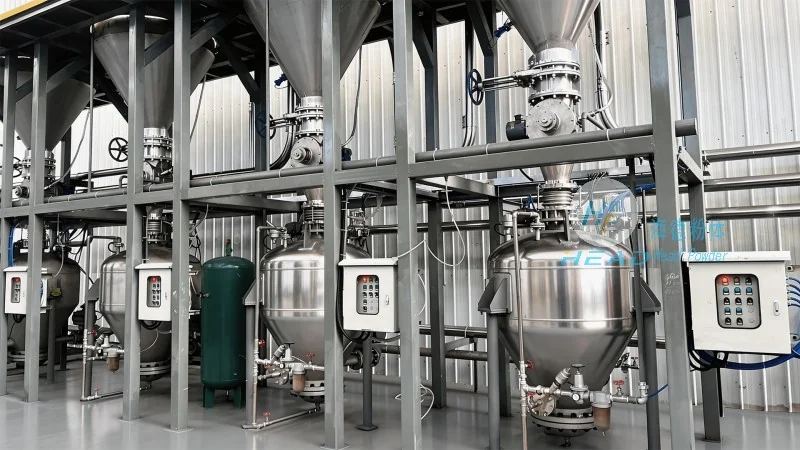
Third, the choice of air compressor and pressure control is crucial. The compressor must be capable of delivering the required air volume and pressure to maintain the desired conveying velocity. For phenolic powders, a positive displacement compressor is often used due to its ability to provide consistent pressure and flow, which is essential for maintaining the stability of the powder-air mixture. Pressure control systems, such as regulators and valves, are also critical to prevent over-pressurization and ensure smooth operation. These components help maintain the optimal pressure differential needed to move the powder through the system efficiently.
Fourth, the inclusion of filtration and dust collection systems is essential for safety and compliance. Phenolic powders are often classified as hazardous due to their potential to cause dust explosions, so proper dust control is paramount. The system should include high-efficiency particulate air (HEPA) filters or other filtration technologies to capture fine particles and prevent their release into the environment. Additionally, explosion-proof designs and spark detection systems may be required in certain applications to mitigate the risk of fire or explosion. These safety features are integrated into the design to ensure that the system operates within regulatory guidelines and protects personnel and equipment.
Material Handling Considerations for Phenolic Powders
Phenolic powders have specific properties that impact the design and operation of pneumatic conveying systems. The material's particle size distribution, moisture content, and flowability are key factors that influence system performance. For example, powders with a high proportion of fine particles may require additional measures to prevent clogging in the pipes or filters. Moisture content can affect the powder's density and flow characteristics, potentially leading to increased pressure losses or material degradation. To address these issues, the design may include pre-drying or conditioning steps to improve the powder's handling properties before it enters the conveying system.
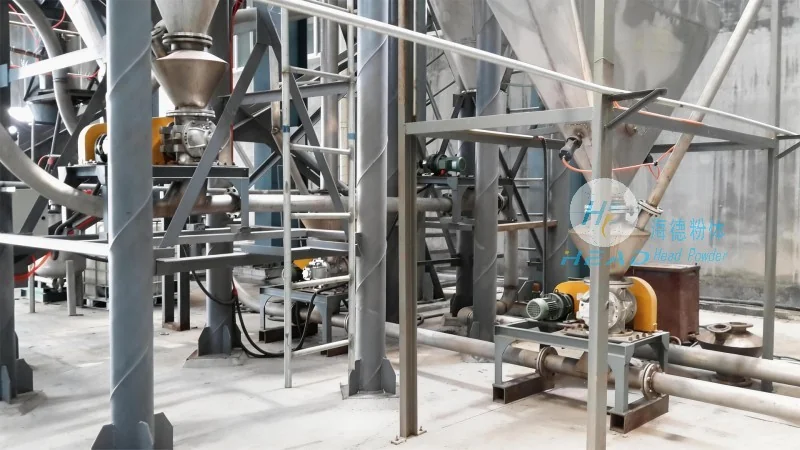
Another consideration is the potential for static electricity buildup, which can be a significant hazard in pneumatic conveying systems. Phenolic powders are often insulating materials, making them prone to generating static charges as they move through the pipes. To mitigate this risk, anti-static additives or grounding systems may be incorporated into the design. These measures help dissipate static electricity and prevent sparks that could ignite dust clouds. Additionally, the use of conductive materials for pipe and equipment components can further reduce the risk of static buildup.
Conclusion: Optimizing Phenolic Powder Handling with Pneumatic Conveying
Pneumatic conveying of phenolic powder materials is a sophisticated process that requires careful consideration of design principles and material properties. By selecting the appropriate conveying method, optimizing system layout, and incorporating safety features, businesses can achieve efficient and reliable material handling solutions. HeadPowder, with its expertise in pneumatic conveying systems, offers tailored solutions that address the unique challenges of phenolic powder applications. The company's commitment to precision engineering and safety ensures that clients receive systems that not only meet their operational needs but also comply with industry standards and regulations. As the demand for efficient material handling continues to grow, pneumatic conveying remains a vital technology for industries relying on phenolic powders, and companies like HeadPowder play a crucial role in advancing this technology to meet evolving market demands.