

Principle and Working Scene Characteristics of Cement Raw Material Powder Conveying Equipment
For industrial applications, especially in the cement production sector, efficient and reliable powder conveying systems are crucial for maintaining production efficiency and ensuring product quality. This article will explore the fundamental principles and operational characteristics of cement raw material powder conveying equipment, focusing on the technical aspects and practical applications within industrial settings.
About Shandong HeadPowder Engineering Co., Ltd.
HeadPowder, a leading engineering firm based in Shandong, China, specializes in the design, manufacturing, and installation of advanced powder handling solutions. With a strong commitment to innovation and customer satisfaction, the company has established itself as a trusted partner in the cement and related industries, providing tailored equipment that meets the specific demands of modern production lines.

The Principle of Cement Raw Material Powder Conveying Equipment
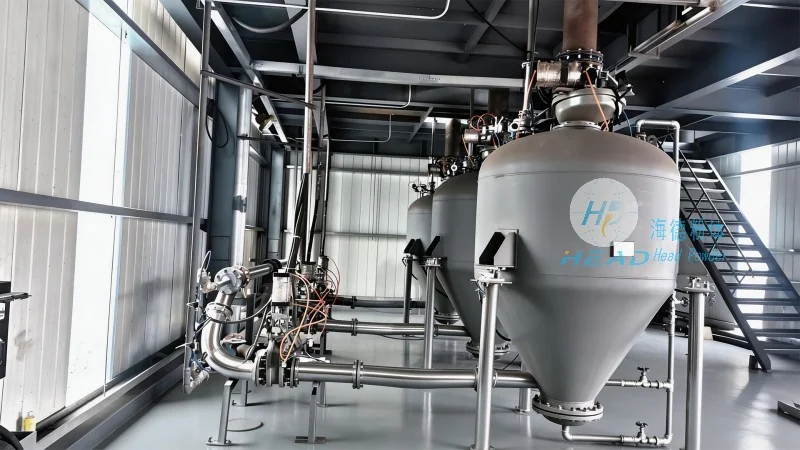
The core of cement raw material powder conveying equipment lies in its ability to transport fine powders over long distances with minimal loss and high efficiency. These systems typically utilize pneumatic or mechanical methods to move materials, with pneumatic systems being particularly common due to their flexibility and suitability for handling sensitive powders. The equipment operates by creating a pressure differential, either by using compressed air or vacuum, to draw or push the powder through a pipeline. Key components include the hopper for material storage, the air compressor or vacuum pump for generating the conveying force, and the pipeline network that delivers the material to the target location. The design of the conveying system is critical, as it must account for factors such as particle size, moisture content, and the specific properties of the raw material to ensure optimal performance. For instance, in cement production, raw materials like limestone, clay, and iron ore are ground into fine powders and then conveyed to the kiln for processing. The conveying equipment must be able to handle these materials without causing agglomeration or degradation, which could affect the final product quality. Advanced systems may incorporate features like temperature control and moisture regulation to maintain the material's integrity during transport.

Working Scene Characteristics of Cement Raw Material Powder Conveying Equipment
The operational characteristics of cement raw material powder conveying equipment are tailored to the unique demands of industrial environments. These systems are designed to handle high volumes of fine powders, often in continuous production processes. The equipment is typically installed in areas where raw materials are processed and prepared for cement production, such as raw material storage facilities, grinding mills, and blending stations. The working scene characteristics include the need for precise control over material flow, minimal dust generation to maintain environmental standards, and the ability to integrate with existing production lines without disrupting operations. Additionally, the equipment must be durable and easy to maintain, as it operates in harsh industrial conditions with high temperatures and abrasive materials. The working environment also requires adherence to safety protocols, ensuring that the conveying process is safe for operators and does not pose risks to the surrounding equipment or personnel. In many cement plants, the conveying system is a critical link between the raw material preparation stage and the kiln, where delays or inefficiencies can significantly impact overall production output. Therefore, the equipment must be reliable and capable of operating continuously for extended periods without frequent maintenance interventions. The working scene also involves considerations of space constraints and layout, as the conveying lines may need to navigate around existing structures or equipment, requiring flexible and adaptable system designs.