

Principle and Working Scene Characteristics of Cement Clinker Material Pneumatic Conveying System
The pneumatic conveying system for cement clinker material is a crucial technology in the cement industry, designed to efficiently transport bulk materials like cement clinker over various distances and under different operational conditions. This system utilizes air as the conveying medium to move solid particles through a pipeline network, offering advantages such as reduced labor costs, minimized material loss, and enhanced safety compared to traditional mechanical conveying methods. Understanding the underlying principles and the diverse working scenarios where these systems are applied is essential for optimizing material handling processes in cement production facilities.

Working Principle of Pneumatic Conveying Systems
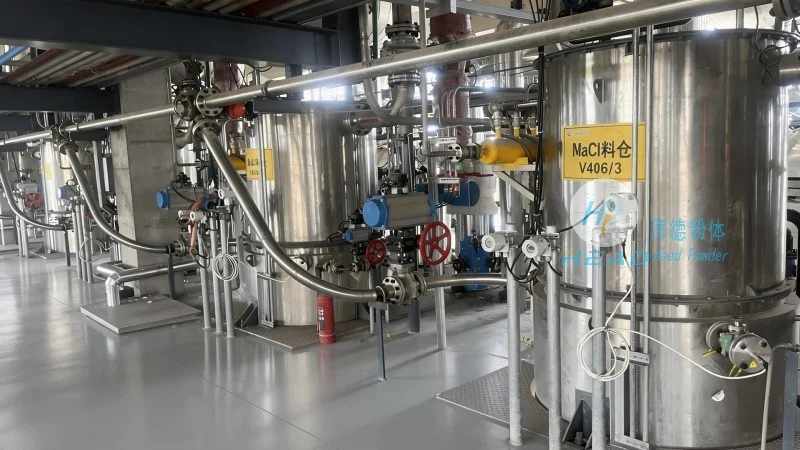
Pneumatic conveying systems operate based on the principles of fluid dynamics and particle motion. There are two primary types: positive pressure (pressure) systems and negative pressure (vacuum) systems. In positive pressure systems, air is supplied under pressure to the material feed point, where it mixes with the clinker particles to form a dense slurry. This mixture is then propelled through the pipeline to the discharge point. Conversely, negative pressure systems draw air and material from the feed point using a vacuum, pulling the material through the pipeline. The selection of system type depends on factors such as the distance to be covered, the material's characteristics (e.g., particle size, moisture content), and the required flow rate. Key components of a pneumatic conveying system include the material feeder, air compressor or vacuum pump, pipeline network, and discharge valve. The material feeder ensures consistent material flow into the system, while the air compressor maintains the necessary pressure or vacuum. The pipeline network, typically made of stainless steel or other corrosion-resistant materials, transports the material and air mixture. The discharge valve controls the release of material at the destination, preventing backflow and ensuring smooth operation.

Working Scene Characteristics and Applications
The working scene characteristics of cement clinker pneumatic conveying systems vary significantly based on the specific requirements of the cement production facility. These systems are widely used in scenarios such as long-distance horizontal and vertical material transport, material mixing and blending, and material transfer between different processing units. For instance, in large-scale cement plants, pneumatic conveying systems are employed to transport clinker from the clinker storage silos to the cement grinding mills over distances of several hundred meters, often involving vertical lifts of 20 meters or more. This capability allows for flexible layout designs, as the pipeline can be routed around obstacles or through different levels of the plant. Another common application is in the blending of clinker with other raw materials, such as limestone or gypsum, to adjust the cement composition. The ability to control the flow rate and mixing ratio precisely in pneumatic conveying systems ensures consistent product quality. Additionally, these systems are suitable for handling materials with varying particle sizes and moisture content, making them adaptable to different cement production processes. The working scene characteristics also include the need for system reliability and low maintenance, as downtime in material transport can significantly impact production efficiency. Therefore, manufacturers often design systems with redundant components and easy access for maintenance to minimize operational disruptions.
About Shandong HeadPowder Engineering Co., Ltd.
Shandong HeadPowder Engineering Co., Ltd., commonly known as HeadPowder, is a leading provider of pneumatic conveying solutions tailored for the cement industry. With a strong focus on innovation and customer-centric design, HeadPowder specializes in developing customized pneumatic conveying systems that meet the unique requirements of cement production facilities. The company's expertise lies in the design, manufacturing, and installation of high-efficiency, low-energy pneumatic conveying systems for cement clinker material transport. HeadPowder's team of engineers and technicians leverages advanced fluid dynamics and material science principles to optimize system performance, ensuring reliable and efficient material handling. The company's systems are engineered to handle various clinker characteristics, including different particle sizes, moisture levels, and bulk densities, while maintaining high material recovery rates and minimal degradation. HeadPowder also offers comprehensive after-sales support, including system maintenance, troubleshooting, and performance optimization services, to ensure long-term operational efficiency for its clients. Based in Shandong, China, HeadPowder serves a global clientele, providing tailored solutions that enhance the productivity and sustainability of cement production processes.