

Principle and Working Scene Characteristics of Caustic Soda Material Pneumatic Conveying Lines
Shandong HeadPowder Engineering Co., Ltd., commonly known as headpowder, is a leading enterprise in the field of industrial material handling systems. With its headquarters located in Shandong, China, the company specializes in the design, manufacturing, and installation of pneumatic conveying equipment tailored for various chemical and industrial applications. This article focuses on the fundamental principles of caustic soda material pneumatic conveying lines and highlights the key characteristics of their operational scenarios.

Overview of Pneumatic Conveying Systems for Caustic Soda
Pneumatic conveying lines are essential for efficiently transporting caustic soda, a highly caustic and corrosive chemical, from storage to processing units within industrial facilities. These systems utilize air pressure to move solid materials through a network of pipes, eliminating the need for mechanical components like belts or buckets that might be prone to wear and tear in corrosive environments. The core principle involves creating a flow of air that carries the caustic soda particles, ensuring a safe and controlled transfer process.
Principle of Operation for Caustic Soda Pneumatic Conveying
The operation of caustic soda pneumatic conveying lines is based on the fundamental physics of fluid dynamics and material transport. There are two primary types of pneumatic conveying systems: suction (or vacuum) systems and pressure systems. Suction systems use a vacuum to draw material from a source, such as a storage silo, into the conveying line. This method is ideal for applications where the material needs to be moved from a lower elevation or over a short distance. In contrast, pressure systems use compressed air to push the material through the pipeline, which is more suitable for longer distances or when the material must be elevated to a higher level.

For caustic soda, the choice of system depends on factors such as the material's bulk density, the distance to be covered, and the required flow rate. The system typically includes a hopper or silo for material storage, a feeder to control the flow rate, a conveying line with appropriate pipe diameter and material (often stainless steel to resist corrosion), and a receiver or discharge point where the material is deposited. The air flow is managed by a blower or compressor, which provides the necessary pressure or vacuum to move the material. The design of the system must also consider the potential for material buildup or blockages, as caustic soda can be sticky or have a tendency to agglomerate, requiring specialized equipment like rotary valves or vibrators to maintain smooth operation.
Key Working Scene Characteristics
The working scene characteristics of caustic soda pneumatic conveying lines are influenced by the specific industrial environment and the requirements of the production process. These characteristics include:
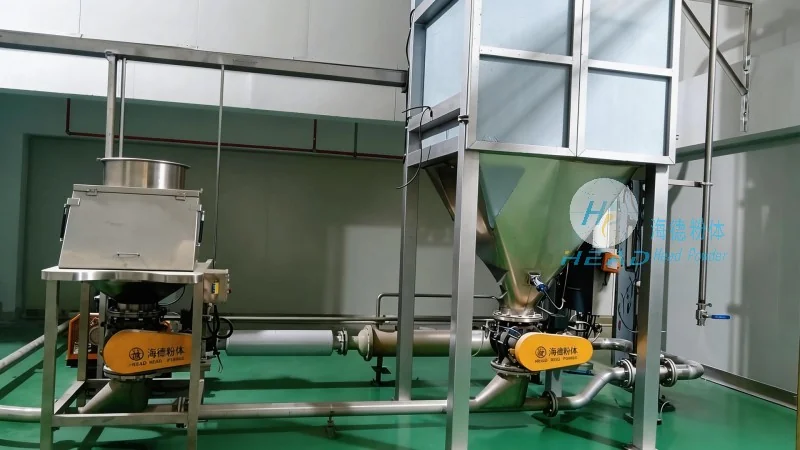
1. Industrial Facility Integration
In many chemical plants, caustic soda is used as a raw material in various processes, such as soap manufacturing, paper production, and water treatment. The pneumatic conveying line must be integrated seamlessly into the existing production layout, connecting the storage silo to the reaction or processing equipment. This integration requires careful planning to ensure minimal disruption to the overall workflow and to maintain compliance with safety regulations regarding the handling of hazardous materials.
2. Safety and Environmental Considerations
Due to the corrosive nature of caustic soda, the entire pneumatic conveying system must be constructed from materials that can withstand chemical exposure, such as stainless steel or specialized coatings. Additionally, the system must be designed to prevent leaks or spills, which could pose significant environmental and health risks. Proper ventilation and dust control measures are also critical, as caustic soda dust can be harmful if inhaled. The working scene often includes safety interlocks and monitoring systems to detect any malfunctions or deviations from normal operation, ensuring that the process remains safe for personnel and the environment.
3. Efficiency and Maintenance Requirements
The operational efficiency of a caustic soda pneumatic conveying line is crucial for maintaining production throughput. The system must be able to handle the required flow rates without excessive energy consumption or material loss. Regular maintenance is essential to prevent blockages, wear on components, and degradation of the conveying line. This includes routine cleaning of the pipes and hoppers, inspection of the feeder and blower, and replacement of worn parts. The working scene characteristics also involve the need for trained personnel to operate and maintain the system, as well as access to spare parts and technical support from the manufacturer.

4. Adaptability to Different Production Scales
Caustic soda pneumatic conveying lines are designed to accommodate various production scales, from small-scale laboratory applications to large-scale industrial operations. The system can be scaled up or down to meet the specific needs of the facility, whether it is a small chemical plant or a large industrial complex. The working scene may involve multiple conveying lines operating simultaneously to handle different batches or production lines, requiring coordination and control systems to ensure smooth and synchronized operation.
Conclusion
Caustic soda material pneumatic conveying lines are a vital component of modern industrial material handling, offering an efficient, safe, and reliable method for transporting caustic soda in chemical and related industries. The principles of operation, combined with the working scene characteristics, ensure that these systems can be tailored to meet the specific needs of different production environments. As a professional manufacturer based in Shandong, China, headpowder continues to provide high-quality pneumatic conveying solutions that enhance productivity and safety in the handling of caustic soda and other industrial materials.