

Principle and Working Scene Characteristics of Air-Driven Pneumatic Conveying Lines for Coagulant Dr
HeadPowder, a leading engineering firm based in Shandong, China, specializes in the design and implementation of advanced pneumatic conveying systems for industrial applications. This article delves into the fundamental principles and operational characteristics of air-driven conveying lines specifically tailored for coagulant dry powder materials, a critical component in water treatment and related industries.
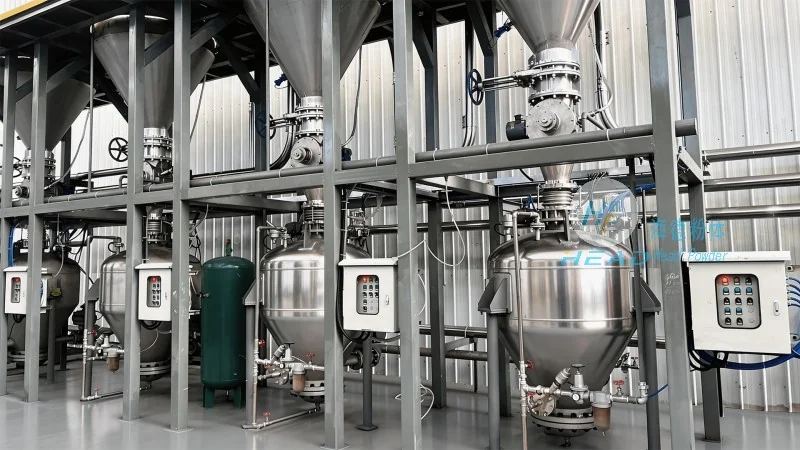
Overview of Coagulant Dry Powder Pneumatic Conveying Systems
Coagulant dry powder materials, such as polyaluminum chloride (PAC) or ferric chloride, are essential in water treatment processes to remove suspended solids and improve water quality. Traditional conveying methods like manual handling or mechanical screw conveyors often face challenges like material degradation, blockages, and high labor costs. Air-driven pneumatic conveying lines offer a more efficient and reliable solution by utilizing compressed air to transport these powders over long distances with minimal loss and contamination.

The Working Principle of Air-Driven Pneumatic Conveying Lines
The core principle of air-driven pneumatic conveying involves the use of a blower or compressor to generate a high-velocity air stream that entrains the dry powder particles. As the air flows through the pipeline, it creates a negative pressure or positive pressure environment, depending on the system design, to pull or push the powder along the conveying path. The system typically consists of several key components: a hopper for material storage, a feeder to control the powder flow rate, a blower or compressor to provide the air pressure, and a pipeline network to transport the material to the destination. The air-powder mixture travels through the pipeline, with the air velocity maintained above the minimum fluidization velocity to prevent particle settling and ensure smooth transport.

Key Working Scene Characteristics
The operational characteristics of air-driven coagulant dry powder conveying lines are tailored to meet the specific demands of industrial water treatment facilities. These systems are designed to handle varying particle sizes and moisture contents, ensuring consistent performance even with fluctuating material properties. The conveying lines are often equipped with features such as pulse-jet cleaning to prevent clogging, temperature control to maintain material integrity, and pressure monitoring to ensure safe and efficient operation. Additionally, the systems are built to accommodate long-distance transport, often exceeding 100 meters, with minimal pressure drop, making them suitable for large-scale water treatment plants.
Advantages in Industrial Applications
Implementing air-driven pneumatic conveying lines for coagulant dry powder materials brings several advantages to industrial operations. Firstly, the system reduces labor costs by automating the material handling process, eliminating the need for manual loading and unloading. Secondly, it minimizes material loss and contamination, as the enclosed pipeline system prevents dust exposure and cross-contamination with other substances. Thirdly, the system enhances process efficiency by ensuring a consistent and continuous supply of coagulant to the water treatment reactors, leading to improved water quality and reduced treatment time. Furthermore, the compact design of these systems allows for easy integration into existing industrial facilities, with minimal space requirements and low maintenance costs.

Conclusion
HeadPowder's air-driven pneumatic conveying lines for coagulant dry powder materials represent a sophisticated solution for modern water treatment and industrial processing needs. By leveraging advanced engineering principles and tailored system designs, these lines provide reliable, efficient, and cost-effective material transport solutions. The company's expertise in designing and implementing such systems ensures that clients in Shandong and beyond can achieve optimal performance and operational efficiency in their industrial processes.