

Operation Process and Working Principle of a Zinc Powder Pneumatic Conveying System
Understanding the operation process and working principle of a zinc powder pneumatic conveying system is crucial for industries that rely on efficient material handling of this reactive metal. This article provides a detailed overview of how such systems function, emphasizing the technical aspects and operational steps involved in the process.

Introduction to Zinc Powder Pneumatic Conveying Systems
Zinc powder, a critical material in various industrial applications including galvanization, chemical manufacturing, and battery production, requires specialized handling due to its fine particle size and potential reactivity. Pneumatic conveying systems offer a safe and efficient method to transport zinc powder from storage to processing units without the need for mechanical components that could cause contamination or material degradation. The system typically consists of a hopper, a blower or compressor, a pipeline network, and a discharge point, all working in tandem to achieve seamless material transfer.
Key Components of the Zinc Powder Pneumatic Conveying System
The effectiveness of a zinc powder pneumatic conveying system hinges on its key components, each designed to perform specific functions in the material handling process. The primary components include:
1. Hopper: This is the storage vessel where zinc powder is initially held. It is equipped with a feeding mechanism, often a rotary valve or a star feeder, to control the flow of powder into the conveying line. The hopper design ensures uniform material discharge and prevents clogging, which is essential for maintaining consistent system performance.
2. Blower or Compressor: The heart of the pneumatic system, this component generates the necessary air pressure to move the zinc powder particles through the pipeline. For zinc powder, which is lightweight and fine, a high-efficiency blower is preferred to avoid excessive energy consumption and to maintain the integrity of the powder particles. The blower's capacity and pressure settings are carefully calibrated to match the system's conveying requirements.
3. Pipeline Network: The conveying line, usually made of stainless steel or other corrosion-resistant materials, is designed to withstand the abrasive nature of zinc powder and potential chemical interactions. The pipeline layout includes bends, elbows, and straight sections, each optimized to minimize pressure drop and prevent particle deposition. Proper pipeline sizing and material selection are critical to ensure long-term system reliability.

4. Discharge Point: At the receiving end of the system, the discharge point, often a receiver or a silo, collects the zinc powder. This component may include a filter or a cyclone to separate any entrained air from the powder, ensuring that the material is delivered in a dry and free-flowing state. The discharge mechanism, such as a rotary valve or a gate valve, controls the flow of powder into the next processing stage.
Working Principle of the Zinc Powder Pneumatic Conveying Process
The operation of a zinc powder pneumatic conveying system follows a systematic process that involves several stages, each contributing to the efficient transfer of material. The process begins with the feeding of zinc powder from the hopper into the conveying line. The blower then generates a high-velocity air stream that entrains the powder particles, creating a slurry of air and material. This mixture travels through the pipeline under pressure, with the air providing the necessary force to move the particles.
As the mixture moves through the pipeline, it encounters various components such as bends and filters. The design of these components is crucial to maintain the flow velocity and prevent particle separation or blockage. The air velocity within the pipeline must be sufficient to keep the zinc powder suspended, typically requiring velocities between 20 to 30 meters per second for fine powders like zinc.
At the discharge point, the air and powder mixture is separated. The cyclone or filter captures the powder and returns it to the process, while the air is either vented to the atmosphere or recirculated back to the blower, depending on the system configuration. This separation step ensures that the zinc powder is delivered in a clean and dry condition, ready for further processing.
Operational Steps and Process Flow
The operational steps of a zinc powder pneumatic conveying system are as follows:
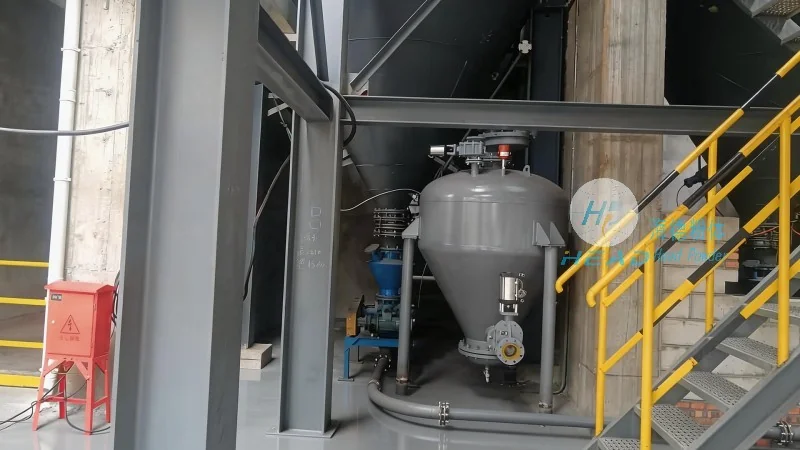
1. Material Loading: Zinc powder is loaded into the hopper from a storage silo or a bulk container. The hopper is designed to accommodate the bulk quantity of powder and to provide a controlled feeding rate.
2. Feeding Initiation: The rotary valve or star feeder at the hopper outlet opens, allowing zinc powder to enter the conveying line. The feeding rate is adjusted based on the system's conveying capacity and the required flow rate to the discharge point.
3. Air Supply Activation: The blower or compressor is activated, generating the necessary air pressure and flow rate. The air is introduced into the pipeline at the hopper end, creating a positive pressure environment that propels the powder forward.
4. Conveying: The zinc powder particles are entrained by the high-velocity air stream and transported through the pipeline. The system monitors pressure and flow rates to ensure that the conveying process is stable and efficient.
5. Discharge and Separation: At the receiving end, the air-powder mixture enters the cyclone or filter. The centrifugal force in the cyclone separates the powder from the air, and the powder is collected in the receiver. The air is then either vented or recirculated, completing the cycle.
6. System Monitoring and Control: Throughout the operation, the system's performance is monitored using sensors and control systems. Parameters such as pressure, flow rate, and temperature are continuously checked to ensure that the system operates within safe and efficient limits. Any deviations are automatically corrected to maintain consistent performance.

Advantages of Using a Zinc Powder Pneumatic Conveying System
Implementing a pneumatic conveying system for zinc powder offers several advantages over traditional mechanical conveying methods. These benefits include:
1. Reduced Contamination: Pneumatic systems minimize the risk of contamination from mechanical components, which is critical for zinc powder used in applications where purity is essential, such as in galvanization or battery manufacturing.
2. Improved Material Integrity: The absence of mechanical parts that could cause abrasion or friction helps maintain the particle size and shape of zinc powder, preserving its quality and performance.
3. Enhanced Safety: By eliminating the need for manual handling of fine powders, the system reduces the risk of dust explosions and improves workplace safety.
4. Space Efficiency: Pneumatic conveying systems are compact and can be installed in confined spaces, making them suitable for facilities with limited floor space.