

Operation Process and Working Principle of Polypropylene Pneumatic Conveying System Equipment
HeadPowder, a leading manufacturer based in Shandong, China, specializes in the design and production of advanced polypropylene pneumatic conveying systems. These systems are engineered to efficiently transport polypropylene materials through a network of pipes using air or gas as the conveying medium. The technology offers a reliable and cost-effective solution for handling polypropylene powders and granules in various industrial applications, such as plastics manufacturing, chemical processing, and food processing. The systems are designed to meet the specific requirements of different industries, ensuring optimal performance and durability.
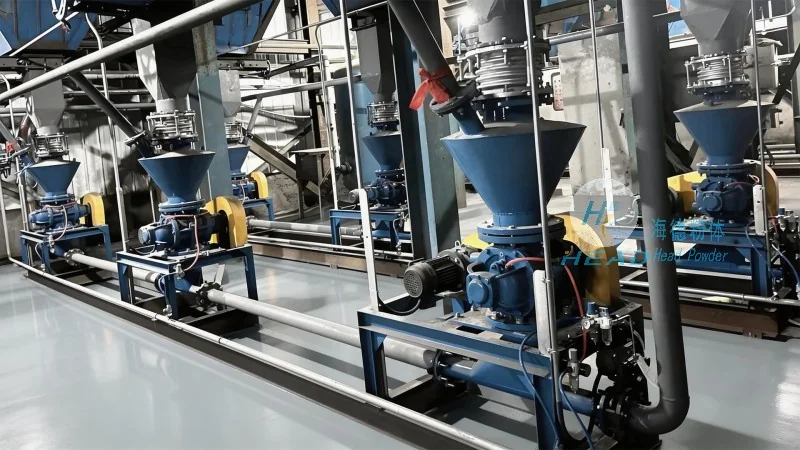
Key Components of the Pneumatic Conveying System
The polypropylene pneumatic conveying system typically consists of several critical components that work in tandem to ensure smooth material transport. These include the hopper for material storage, a rotary valve or feeder to control the flow of polypropylene, the conveying pipeline network, a blower or compressor to generate the necessary air pressure, and a receiver or discharge unit for material collection. The hopper is equipped with a lid and a discharge port to prevent material spillage and contamination. The rotary valve, often a star valve or slide valve, regulates the flow rate of polypropylene into the pipeline, preventing overloading or underloading. The conveying pipeline is made of materials resistant to polypropylene, such as stainless steel or special plastics, to avoid corrosion or material adhesion. The blower or compressor provides the necessary pressure and airflow, with adjustable speed to match the material handling needs. The receiver is designed to collect the conveyed polypropylene, often with a filter to remove any air or dust particles.

Operation Process of the Polypropylene Pneumatic Conveying System
The operation of the polypropylene pneumatic conveying system follows a systematic process to ensure efficient material handling. Initially, polypropylene is loaded into the hopper from a bulk container or storage silo. The rotary valve then regulates the flow of material into the conveying pipeline, ensuring a consistent feed rate. Simultaneously, the blower generates the required air pressure, which propels the polypropylene particles through the pipeline. As the material travels, it is carried by the air stream, and the system ensures that the polypropylene reaches the designated discharge point, such as a processing machine or storage bin. The receiver collects the material, completing the transport cycle. The process is continuous and can be adjusted to handle varying material volumes and pipeline lengths, with the ability to start or stop the system as needed. The system also includes safety features, such as pressure relief valves and air filters, to prevent overpressure and maintain air quality.
Working Principle of the Pneumatic Conveying System
The working principle of the polypropylene pneumatic conveying system is based on the principle of fluidization and pneumatic transport. The system uses compressed air to create a flow that lifts and moves the polypropylene particles. The air pressure is maintained at a level sufficient to overcome the gravitational force acting on the material and any friction within the pipeline. The velocity of the air stream is carefully controlled to prevent material degradation or blockages. The system operates by creating a pressure differential between the hopper and the receiver, which drives the material through the pipeline. The air and material are separated at the receiver using a cyclone or filter, ensuring that the polypropylene is delivered to the target location without loss or contamination. The system also incorporates features to manage air and material separation, such as a venturi or a venturi tube, which helps in reducing the air velocity and allowing the material to settle and be collected.

Advantages of Using Polypropylene Pneumatic Conveying Systems
Implementing a polypropylene pneumatic conveying system offers several advantages for industrial operations. Firstly, it provides a dust-free and hygienic method of material transport, which is crucial for maintaining product quality and compliance with industry standards, especially in food and pharmaceutical industries. Secondly, the system minimizes material handling and reduces the risk of product contamination, as the material is conveyed in a closed pipeline system. Additionally, it offers flexibility in terms of pipeline layout, allowing for complex and multi-directional transport routes, which can be adjusted to suit the specific needs of the plant layout. The system also contributes to energy efficiency by optimizing air usage and reducing downtime due to blockages or maintenance. Furthermore, the system can handle a wide range of polypropylene particle sizes and shapes, from fine powders to coarse granules, without requiring significant modifications. This versatility makes the system suitable for various applications, from small-scale operations to large-scale industrial plants.