

Operation Process and Working Principle of Catalyst Powder Pneumatic Conveying System Equipment
HeadPowder, a leading manufacturer based in Shandong, China, specializes in the design, production, and supply of advanced pneumatic conveying systems tailored for catalyst powders. This article provides a detailed overview of the operation process and working principles of such systems, highlighting the technical aspects and practical applications that define the industry's standard for efficient material handling.

Understanding Pneumatic Conveying Systems for Catalyst Powders
Pneumatic conveying systems are engineered to transport bulk materials like catalyst powders through a pipeline using air or other gases as the conveying medium. These systems are particularly valuable in industrial settings where catalyst powders need to be moved from one location to another without the need for mechanical components like belts or buckets. The technology offers advantages such as reduced contamination, improved safety, and enhanced process control compared to traditional methods.
Key Components of the Pneumatic Conveying System
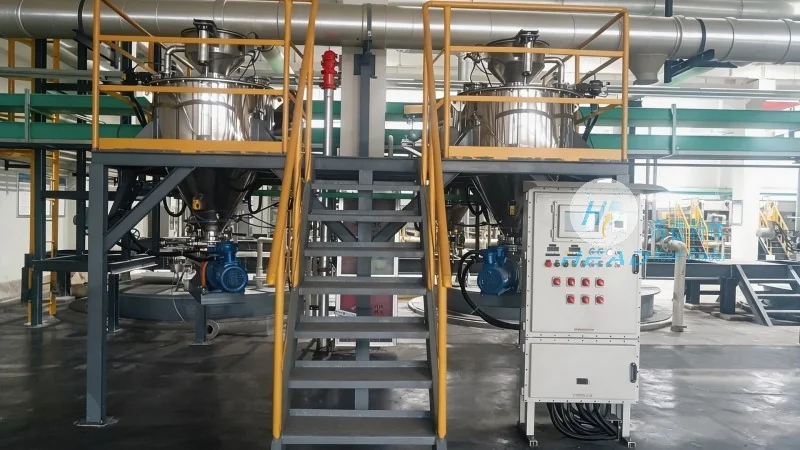
The catalyst powder pneumatic conveying system typically consists of several critical components that work in tandem to ensure efficient operation. These include the hopper or feeder, which stores and feeds the catalyst powder into the system; the air compressor or blower, which generates the necessary air pressure to move the material; the pipeline network, which transports the powder; and the control system, which regulates the flow and pressure to maintain optimal performance. Each component plays a vital role in the overall functionality of the system.
The Operation Process: Step-by-Step Breakdown
The operation of a catalyst powder pneumatic conveying system follows a systematic process that ensures consistent and reliable material transport. The process begins with the catalyst powder being loaded into the hopper. The feeder then meters the powder into the pipeline at a controlled rate. Simultaneously, the air compressor generates compressed air, which is introduced into the pipeline. The air flow creates a pressure differential that propels the powder particles through the system. As the powder travels, it may encounter various sections of the pipeline, including bends, expansions, or filters, which are designed to maintain the flow and prevent blockages. The system concludes with the powder being discharged at the destination point, where it is collected and used in the next stage of the production process.

Working Principle: How the System Transfers Catalyst Powders
The working principle of the pneumatic conveying system is based on the fundamental physics of fluid dynamics and particle motion. When air is introduced into the pipeline, it creates a low-pressure zone that draws the catalyst powder particles into the air stream. The combination of air velocity and particle size determines the conveying velocity, which must be sufficient to overcome the gravitational forces and any frictional losses within the pipeline. The system may operate in either dilute-phase or dense-phase modes, depending on the material characteristics and the required transport efficiency. Dilute-phase systems use higher air velocities to keep the powder suspended in the air, while dense-phase systems use lower velocities to form a slurry-like mixture, which is more suitable for longer distances or sensitive materials. The control system continuously monitors parameters such as pressure, flow rate, and temperature to adjust the operation and ensure optimal performance.
Advantages of Using Pneumatic Conveying for Catalyst Powders
Implementing a pneumatic conveying system for catalyst powders offers numerous benefits that enhance operational efficiency and product quality. One of the primary advantages is the ability to minimize contamination, as the system is enclosed and prevents exposure to external elements. This is crucial for catalyst powders, which are often sensitive to moisture, dust, or other contaminants that could degrade their performance. Additionally, the system reduces labor costs by automating the material handling process, eliminating the need for manual loading and unloading. Safety is another key benefit, as the enclosed system prevents dust explosions and reduces the risk of accidents associated with handling bulk materials. Furthermore, the system allows for precise control over the flow rate and pressure, enabling consistent delivery of catalyst powders to downstream processes, which is essential for maintaining product quality and process stability.
Applications in Industrial Settings
Pneumatic conveying systems for catalyst powders are widely used in various industrial applications, including chemical manufacturing, petrochemical processing, and pharmaceutical production. In chemical plants, these systems are employed to transport catalyst powders to reactors or reactors to catalyst storage areas, ensuring a continuous supply of materials for chemical reactions. In petrochemical facilities, the systems are used to handle catalyst powders used in refining processes, such as cracking or reforming, where the efficiency of the catalyst is critical to the overall production output. In pharmaceutical manufacturing, the systems are utilized to transport catalyst powders used in the synthesis of active pharmaceutical ingredients (APIs), where purity and consistency are paramount. The versatility of the system makes it suitable for a wide range of applications, from small-scale laboratory operations to large-scale industrial production.
Maintenance and Operational Considerations
Proper maintenance and operational considerations are essential to ensure the long-term reliability and efficiency of the catalyst powder pneumatic conveying system. Regular maintenance activities include cleaning the hopper and feeder to prevent material buildup, inspecting the air compressor and blower for wear and tear, and checking the pipeline for blockages or leaks. The control system should be calibrated periodically to maintain accurate pressure and flow readings. Operational considerations include monitoring the system's performance parameters, such as pressure drop and flow rate, to detect any deviations that may indicate a problem. Additionally, the system should be operated within the recommended pressure and flow ranges to avoid damage to components and ensure optimal conveying efficiency. By following these maintenance and operational guidelines, the system can operate at peak performance, minimizing downtime and maximizing the lifespan of the equipment.
Conclusion
HeadPowder's catalyst powder pneumatic conveying systems represent a sophisticated solution for the efficient and reliable handling of bulk materials in industrial settings. The system's operation process, which involves feeding, conveying, and controlling the material flow, is designed to meet the stringent requirements of catalyst powders, ensuring minimal contamination and consistent performance. The working principle, based on fluid dynamics and particle motion, enables the system to transport materials over long distances with high efficiency. By leveraging the advantages of pneumatic conveying, industries can enhance their operational efficiency, improve product quality, and ensure safety in the handling of catalyst powders. As a leading manufacturer based in Shandong, China, HeadPowder continues to innovate and provide advanced solutions that meet the evolving needs of the industry.