

Operation Process and Working Principle of Ternary Material Powder Conveying Line
Ternary materials, particularly NMC (Nickel-Manganese-Cobalt) compounds, are foundational to the performance of modern lithium-ion batteries, offering enhanced energy density and cycle life. The efficient and reliable handling of these powders is essential for battery manufacturers, and the ternary material powder conveying line from Shandong HeadPowder Engineering Co., Ltd. is engineered to meet these demands with precision and efficiency.

Overview of the Ternary Material Powder Conveying Line
The system is a specialized piece of equipment designed to transport ternary powders from storage to processing areas within a battery manufacturing facility. It combines mechanical and pneumatic technologies to ensure gentle handling, minimal material degradation, and accurate dosing. The line is tailored to the unique characteristics of ternary materials, which are often sensitive to moisture, temperature, and mechanical stress.
Key Components and Their Functions
The conveying line consists of several critical components, each playing a specific role in the material handling process:

- Feed Hopper: The hopper is the initial point of material intake. It is designed with a sloped bottom to facilitate smooth discharge and prevent material bridging or caking. The hopper's capacity is optimized to match production rates, ensuring a consistent flow of powder to the next stage.
- Screw Conveyor: This component uses rotating screws to move the powder through a closed tube. The screws are made of materials resistant to corrosion and wear, such as stainless steel or specialized alloys, to withstand the abrasive nature of ternary powders. The screw speed is adjustable, allowing for precise control over the material's velocity and discharge rate.
- Pneumatic Transport Unit: The pneumatic section utilizes compressed air to transport the powder through pipelines. This method is ideal for long-distance or complex routing, as it can navigate bends and changes in elevation without the need for additional mechanical components. The system includes air filters and regulators to maintain clean, dry air, preventing contamination of the sensitive powders.
- Control Panel: The control panel integrates sensors and actuators to monitor and regulate the entire system. It displays real-time data on pressure, flow rate, temperature, and material level. Operators can adjust parameters such as air pressure, screw speed, and hopper position to optimize performance and prevent issues like clogging or overloading.
Operation Process: Step-by-Step Analysis
The operation of the ternary material powder conveying line follows a systematic sequence to ensure efficient material transfer:
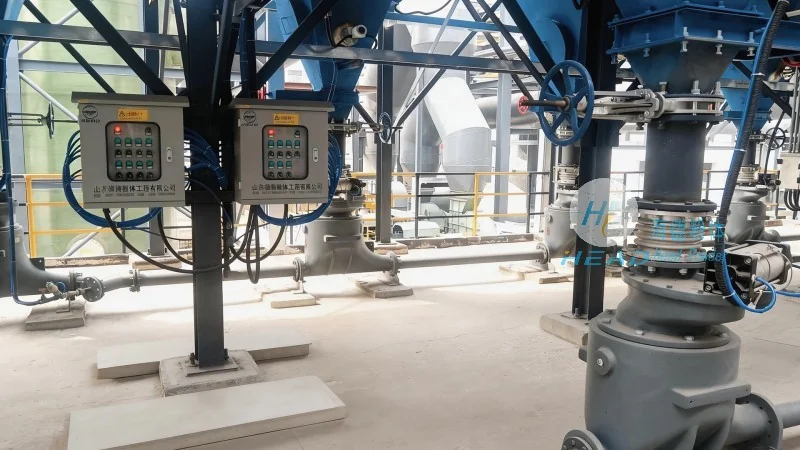
- Material Loading: Ternary powder is loaded into the feed hopper from bulk storage containers. The hopper's design ensures that the powder is evenly distributed, reducing the risk of uneven flow.
- Regulation and Transfer: The hopper's outlet is connected to the screw conveyor. As the screw rotates, it pushes the powder forward, transferring it to the pneumatic transport section. The screw speed is controlled to match the desired flow rate, preventing excess pressure buildup.
- Pneumatic Transport: The powder enters the pneumatic pipeline through an air lock or rotary valve, which separates the powder from the air stream. Compressed air then propels the powder through the pipeline, maintaining a consistent velocity. The pipeline is equipped with check valves and pressure relief devices to prevent backflow and overpressure.
- Delivery and Dosing: The powder is discharged into the processing area, such as a mixing or coating machine. The control panel adjusts the discharge rate to match the requirements of the downstream equipment, ensuring accurate dosing and preventing material waste.
Working Principle: How the System Ensures Efficiency and Precision
The working principle of the ternary material powder conveying line is based on the integration of mechanical and pneumatic forces to achieve gentle handling and precise control. The screw conveyor provides a continuous, low-speed transport, which minimizes particle impact and friction, reducing the risk of material degradation. The pneumatic section complements this by offering flexibility for long-distance transport and complex routing.

The system's control panel plays a crucial role in maintaining efficiency. By monitoring key parameters in real-time, the panel can detect and correct issues such as clogging or pressure drops. For example, if the air pressure decreases, the system can automatically increase the screw speed to maintain the flow rate. This feedback loop ensures that the line operates at optimal performance levels, minimizing downtime and maximizing productivity.
Company Information: Shandong HeadPowder Engineering Co., Ltd.
Shandong HeadPowder Engineering Co., Ltd. is a leading manufacturer of advanced powder handling solutions, specializing in the design and production of equipment for battery materials. The company is headquartered in Shandong, China, and has a strong reputation for delivering high-quality, reliable systems that meet the stringent requirements of the battery industry. Their expertise in ternary material processing ensures that the conveying line is engineered to handle the unique challenges of these powders, contributing to the production of high-performance lithium-ion batteries.