

Operation Process and Working Principle of Dry Stone Powder Material Handling System Equipment
Shandong HeadPowder Engineering Co., Ltd., a leading manufacturer based in Shandong, China, specializes in the design and production of efficient dry stone powder material handling systems. These systems are engineered to handle bulk dry stone powder with precision and reliability, catering to various industrial applications. The company's commitment to quality and innovation ensures that each system meets the highest standards of performance and durability, making them essential for modern industrial operations.
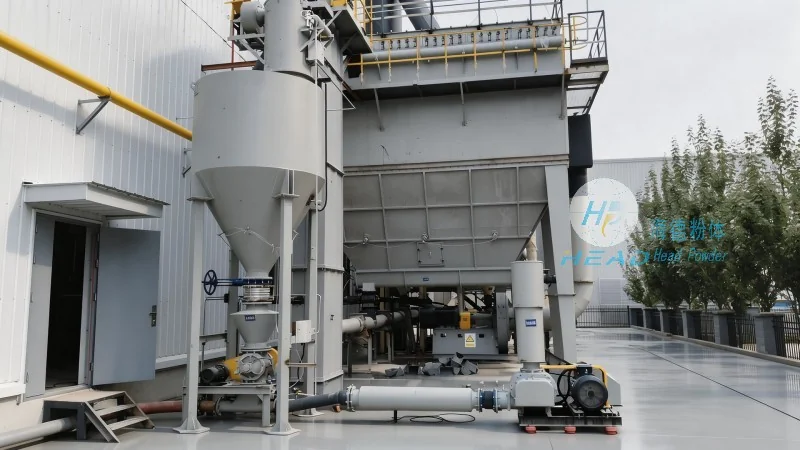
Key Components and Structural Design of the Material Handling System
The dry stone powder material handling system comprises several critical components, each designed to perform a specific function while working in harmony with the others. The primary components include a large-capacity hopper for material storage, a robust conveyor mechanism for transporting the powder, and an intelligent control system for real-time monitoring and adjustment. The hopper is constructed with a sloped interior and a discharge outlet at the bottom, ensuring that the dry stone powder flows smoothly without clogging. This design is crucial for preventing material buildup and maintaining consistent material feed rates. The conveyor system, typically a belt or screw conveyor, is made from high-quality, wear-resistant materials to withstand the abrasive nature of the stone powder. It is equipped with adjustable speed controls to regulate the flow rate, allowing for precise control over the material movement. The control system integrates sensors, such as pressure and flow sensors, and actuators to adjust the conveyor speed and hopper discharge as needed, ensuring optimal performance and preventing system overload.

Step-by-Step Operation Process of the Material Handling System
The operation of the dry stone powder material handling system begins with the loading of the dry stone powder into the hopper. The material is then discharged from the hopper into the conveyor system, where it is transported to the target location, such as a storage silo or processing unit. The conveyor mechanism moves the powder continuously, maintaining a steady flow rate. The control system continuously monitors the pressure and flow within the system, adjusting the conveyor speed to prevent overloading or underflow. This dynamic adjustment ensures that the system operates within its designed capacity, maximizing efficiency and minimizing material waste. The process continues until the hopper is emptied or the desired amount of powder has been transported, after which the system can be reset for the next batch of material.
Working Principle Explained: How the System Transfers Dry Stone Powder
The working principle of the dry stone powder material handling system is based on the fundamental principles of gravity and mechanical force. The hopper provides a controlled environment where the dry stone powder accumulates, and gravity pulls the material towards the discharge outlet. The conveyor system then uses mechanical energy to transport the powder from the hopper to the destination. The control system plays a vital role in maintaining the balance between the input and output rates. By monitoring the pressure and flow, the system adjusts the conveyor speed to ensure that the material is transferred at a consistent rate. This dynamic control prevents issues such as material buildup in the hopper or conveyor jamming, which could lead to system downtime. The system is also designed to handle varying particle sizes and moisture content, ensuring that the powder remains dry and free-flowing throughout the process.

Advantages and Practical Applications in Industrial Settings
The dry stone powder material handling system offers several significant advantages that make it a preferred choice for industrial applications. The system's ability to handle bulk materials efficiently reduces labor costs and increases production throughput, leading to higher productivity. The precise control over the material flow ensures that the powder is delivered to the processing unit in the correct quantity and at the right time, improving overall process efficiency. The system is also designed to be flexible, allowing for easy integration with existing industrial setups, which minimizes installation time and costs. It is commonly used in industries such as mining, construction, and chemical processing, where the handling of dry stone powder is a critical step in the production process. For example, in mining operations, the system is used to transport crushed stone from the crushing plant to storage silos, while in construction, it is used to deliver stone powder to concrete mixing plants. The system's durability and low maintenance requirements further enhance its appeal, making it a cost-effective solution for long-term industrial use.