

Operation Process and Working Principle of Pneumatic Conveying Equipment for Inorganic Salt Material
Shandong HeadPowder Engineering Co., Ltd., commonly known as HeadPowder, specializes in the design, manufacturing, and supply of advanced pneumatic conveying equipment tailored for handling inorganic salt materials. With a focus on efficiency, reliability, and safety, our equipment is engineered to meet the diverse needs of industries that rely on the transport of bulk inorganic salts. The company is headquartered in Shandong, China, where it leverages local expertise and resources to deliver high-quality solutions for material handling challenges.

Working Principle of Pneumatic Conveying Systems
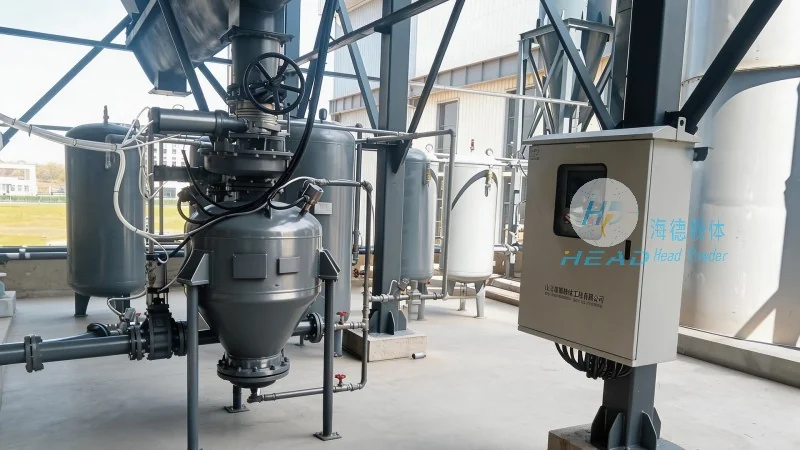
Pneumatic conveying equipment operates by using a pressurized or vacuum system to transport bulk materials through a pipeline. In the case of inorganic salt materials, the system typically employs a positive pressure method, where air is forced through the material to create a fluidized state. This process involves several key components: a feeding hopper to introduce the salt into the system, a conveyor line that transports the material, and a control system to regulate air flow and pressure. The working principle ensures that the salt particles are suspended in the air stream, allowing for smooth and continuous movement from the source to the destination.

Operation Process of the Equipment
The operation process of our pneumatic conveying equipment for inorganic salt materials begins with material loading into the feeding hopper. The hopper is equipped with a valve that controls the flow rate of the salt into the conveyor line. As the material enters the pipeline, the air compressor generates a high-pressure air stream that mixes with the salt particles. The air-salt mixture travels through the pipeline, maintaining a consistent velocity to prevent material deposition or blockage. At the receiving end, a separator or cyclone separates the salt from the air, allowing the salt to be discharged into a storage bin or processing unit. The system also includes safety features such as pressure relief valves and air filters to ensure operational safety and environmental compliance.
Key Features and Benefits
Our pneumatic conveying equipment for inorganic salt materials offers several advantages over traditional methods like belt conveyors or bucket elevators. These include: 1) Reduced risk of material contamination due to enclosed systems; 2) Lower maintenance costs as there are fewer moving parts; 3) Improved energy efficiency by optimizing air flow and pressure; 4) Enhanced safety through the absence of open conveyors, minimizing dust exposure and operational hazards. The equipment is designed to handle various types of inorganic salts, including sodium chloride, potassium chloride, and other industrial salts, with consistent performance and reliability.

Application Scenarios
The pneumatic conveying equipment from HeadPowder is widely used in industries such as chemical manufacturing, food processing, and mining. In chemical plants, it efficiently transports raw inorganic salts to production lines, ensuring a steady supply of materials for chemical reactions. In food processing facilities, the equipment handles salt for seasoning and preservation, maintaining hygiene standards and preventing cross-contamination. In mining operations, it transports mined salts to processing facilities, supporting the extraction and processing of mineral resources. The versatility of the system makes it suitable for both small-scale and large-scale applications, adapting to the specific requirements of each industry.