

Operation Process and Working Principle of Pigment Masterbatch Particle Pneumatic Conveying Line
HeadPowder, a leading engineering company based in Shandong, China, specializes in the design, manufacturing, and installation of advanced pneumatic conveying systems tailored for the efficient handling of pigment masterbatch particles. This article provides a detailed overview of the operation process and working principle of such systems, highlighting their efficiency, reliability, and industrial applications.

Introduction to Pigment Masterbatch Particle Pneumatic Conveying
Pigment masterbatch particles are crucial raw materials in the plastics, rubber, and coatings industries, requiring precise and dust-free transportation from storage to processing units. Traditional methods like belt conveyors or manual handling often face challenges such as material degradation, contamination, and high labor costs. Pneumatic conveying lines offer a solution by utilizing air pressure to transport these particles in a closed system, ensuring minimal exposure to external elements and maintaining product integrity.
Key Components of a Pneumatic Conveying System
The pneumatic conveying line for pigment masterbatch particles typically consists of several core components that work in tandem to achieve efficient material transport. These include the hopper or storage silo, a rotary valve or feeder for controlled material discharge, a pipeline system with appropriate diameter and material (often stainless steel to prevent corrosion), a positive or negative pressure blower or fan, and a receiver or destination silo for the material. Each component plays a critical role in the overall operation, ensuring smooth and continuous flow of the masterbatch particles.
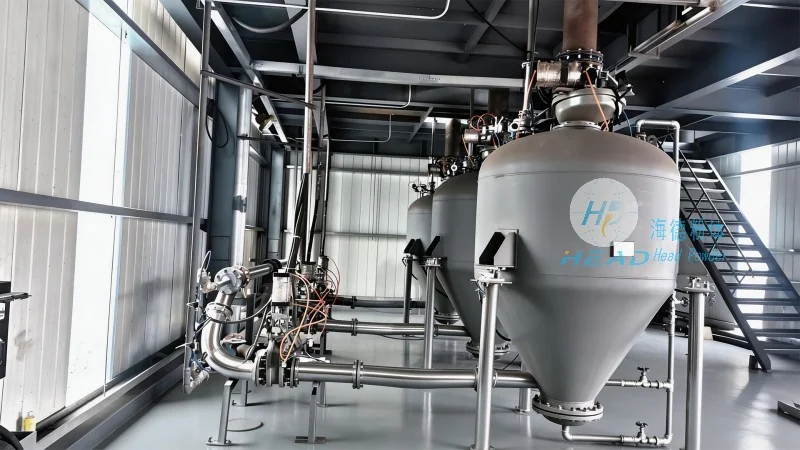
Working Principle of the Pneumatic Conveying Process
The operation of the pneumatic conveying line begins with the material being fed from the storage hopper into the pipeline system. A rotary valve or feeder regulates the flow rate, ensuring a consistent supply of pigment masterbatch particles. The blower then generates the necessary air pressure, either by creating a positive pressure (pushing the material forward) or negative pressure (suctioning the material), depending on the system design. As the air and material mixture travels through the pipeline, the particles are suspended and transported to the destination silo. The receiver then separates the material from the air, often using a cyclone separator or filter, and collects the pigment masterbatch particles in a clean and dry state.
Operation Process: Step-by-Step Overview
The operation process of the pneumatic conveying line involves several sequential steps that ensure optimal performance and product quality. First, the storage hopper is filled with pigment masterbatch particles, and the system is prepared for operation. Next, the rotary valve is activated to control the material discharge rate, matching the demand of the processing unit. The blower is then started, establishing the required air pressure in the pipeline. As the material is fed into the system, it is carried by the air flow, traveling through the pipeline to the destination silo. The receiver collects the particles, and the air is either recirculated or vented, depending on the system configuration. This continuous cycle allows for uninterrupted material transport, minimizing downtime and maximizing productivity.

Advantages of Pneumatic Conveying for Pigment Masterbatch Particles
Compared to traditional conveying methods, pneumatic conveying lines offer several advantages that make them ideal for handling pigment masterbatch particles. These include: (1) Dust-free operation, which reduces environmental contamination and improves workplace safety; (2) Minimal material degradation, as the particles are not subjected to mechanical stress or friction; (3) High efficiency and speed, allowing for rapid transport over long distances; (4) Versatility in system design, accommodating various particle sizes and flow rates; (5) Reduced labor costs and maintenance, as the system operates automatically with minimal human intervention. These benefits make pneumatic conveying a preferred choice for industries seeking reliable and efficient material handling solutions.
Industrial Applications and Case Studies
Pneumatic conveying lines for pigment masterbatch particles are widely used in various industrial applications, including the plastics manufacturing industry, where they transport masterbatch to extrusion lines; the rubber industry, for processing colorant masterbatches; and the coatings industry, for delivering pigment powders to mixing and application equipment. Companies like Shandong HeadPowder Engineering Co., Ltd. have successfully implemented such systems in numerous projects, demonstrating their effectiveness in improving production efficiency and product quality. For example, a client in the plastics sector reported a 30% increase in production speed and a 20% reduction in material waste after installing a customized pneumatic conveying line, highlighting the tangible benefits of this technology.

Maintenance and Operational Considerations
To ensure the long-term reliability and performance of the pneumatic conveying line, regular maintenance and operational considerations are essential. This includes monitoring the blower performance, checking for air leaks in the pipeline, cleaning the cyclone separator and filters regularly, and inspecting the rotary valve and feeder for any blockages or wear. Additionally, the system should be operated within the recommended pressure and flow rates to prevent damage to components and ensure consistent material transport. Proper training of operators and adherence to safety protocols are also crucial to maintain the system's efficiency and safety.
Conclusion
In conclusion, the pneumatic conveying line for pigment masterbatch particles is a sophisticated and efficient system that addresses the challenges of handling these critical raw materials. By understanding the working principle and operation process, industries can leverage this technology to enhance productivity, maintain product quality, and reduce operational costs. With the expertise of companies like Shandong HeadPowder Engineering Co., Ltd., businesses can implement customized pneumatic conveying solutions tailored to their specific needs, ensuring optimal performance and long-term success in their operations.