

Choosing Between Positive Pressure and Negative Pressure for Chlorinated Polyethylene Pneumatic Conv
When it comes to transporting chlorinated polyethylene (CPE) via pneumatic conveying systems, selecting the right pressure type—positive or negative—is a critical decision that impacts efficiency, safety, and operational costs. Both positive pressure and negative pressure pneumatic conveying offer distinct advantages and are suitable for different scenarios. Understanding the differences and how to distinguish between them is essential for optimizing material handling processes. This article explores the key aspects of positive pressure versus negative pressure systems, providing insights into their characteristics, applications, and practical considerations for CPE handling.
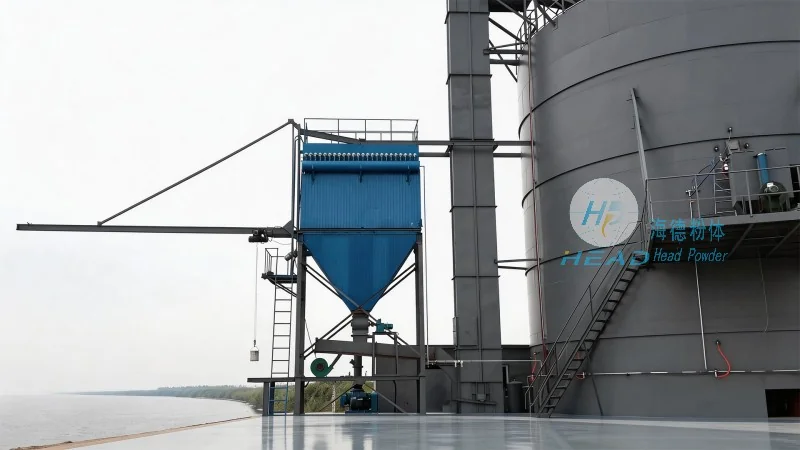
Introduction to Pneumatic Conveying for Chlorinated Polyethylene
Chlorinated polyethylene is a versatile polymer used in various industries, including construction, automotive, and manufacturing, due to its excellent weather resistance and chemical stability. Pneumatic conveying is a common method for transporting bulk CPE, as it allows for efficient, dust-free, and automated material movement. However, the choice between positive pressure and negative pressure systems depends on factors such as material properties, system layout, and operational requirements.

Positive Pressure Pneumatic Conveying Systems
Positive pressure systems operate by blowing air or gas into the conveying line, creating a pressure higher than the ambient air pressure. This method is often preferred for materials that are abrasive, sticky, or prone to bridging, as the high pressure helps maintain consistent flow and prevents material buildup. In the context of CPE, positive pressure can be effective for handling powders or granules that require gentle yet forceful movement. The system typically includes a blower or compressor at the inlet, which supplies the necessary air pressure to push the material through the pipeline. This approach is particularly suitable for short to medium-distance conveying and when the material is to be discharged into a single point or a collection hopper.
Negative Pressure Pneumatic Conveying Systems
Conversely, negative pressure systems work by creating a vacuum or low pressure inside the conveying line, drawing material from the source into the system. This method is ideal for materials that are light, dusty, or require a clean environment, as the vacuum helps contain particles and minimize dust dispersion. For CPE, negative pressure is often used when the material is to be transported over longer distances or when multiple discharge points are needed. The system relies on a vacuum pump or fan at the outlet to create the suction, pulling the material from the hopper or storage bin into the pipeline. This approach is particularly effective for handling fine powders or when the material needs to be transferred from a central source to several destinations.

Distinguishing Between Positive and Negative Pressure Systems
The primary way to distinguish between positive and negative pressure systems is based on the direction of air flow and the pressure differential relative to ambient conditions. Positive pressure systems have a pressure greater than the surrounding air, while negative pressure systems have a pressure lower than ambient. Other key differences include the location of the air source (inlet for positive, outlet for negative) and the system's design for material handling. For CPE, the choice may also depend on the material's bulk density, flowability, and the presence of moisture or contaminants. For instance, if the CPE is in a dry, free-flowing state, positive pressure might be more efficient for short-distance transport, whereas negative pressure could be better for longer distances or when the material is prone to generating dust.