

Lithium-Ion Battery Positive Electrode Pneumatic Conveying: Choosing Positive Pressure or Negative P
Lithium-ion battery manufacturing processes rely heavily on efficient material handling, particularly for the positive electrode components. Pneumatic conveying systems have emerged as a critical solution for transporting these delicate and often abrasive materials with precision and minimal risk of contamination. However, when selecting the appropriate pneumatic conveying method for lithium-ion battery positive electrodes, manufacturers face a key decision: should they opt for positive pressure or negative pressure systems? This article explores the distinctions between these two approaches and provides guidance on how to determine the most suitable option for specific applications.

Understanding Pneumatic Conveying Basics
Pneumatic conveying systems use air to transport bulk materials through a pipeline network. The primary difference between positive and negative pressure systems lies in the direction of air flow and the pressure differentials maintained within the system. Positive pressure systems operate by blowing air into the conveying line, creating a pressure higher than the ambient environment. Conversely, negative pressure systems draw air from the conveying line, creating a vacuum that pulls material through the system.
Key Considerations for Positive Pressure Pneumatic Conveying
Positive pressure pneumatic conveying is often preferred for applications involving lithium-ion battery positive electrodes due to its ability to handle abrasive or sensitive materials without causing degradation. This method typically uses compressed air to propel material through the pipeline, ensuring a consistent flow rate and minimal particle breakage. The system is also well-suited for long-distance or complex route conveying, as the pressure can be maintained throughout the entire pipeline. However, it requires robust equipment to manage the higher air pressures and may generate more noise and require additional filtration to prevent dust accumulation in the environment.

Key Considerations for Negative Pressure Pneumatic Conveying
Negative pressure pneumatic conveying, also known as vacuum conveying, is another viable option for lithium-ion battery positive electrode handling. This approach is particularly effective for transporting materials from multiple sources or for applications where the material is sensitive to high air velocities or pressure differentials. The vacuum system can gently pull material through the pipeline, reducing the risk of particle damage and ensuring a clean, dust-free environment. However, negative pressure systems may have limitations in terms of conveying distance and material throughput compared to positive pressure systems, as the vacuum strength diminishes over longer distances.

Distinguishing Between Positive and Negative Pressure Systems
When evaluating which pneumatic conveying system is best for lithium-ion battery positive electrodes, several factors must be considered. The first is the material's physical properties, such as particle size, density, and abrasiveness. For example, if the positive electrode material is fine and easily broken, a negative pressure system might be more suitable to minimize particle attrition. Conversely, if the material is coarse and requires high throughput, a positive pressure system may offer better performance. Another critical factor is the conveying distance and system complexity. Positive pressure systems are generally more efficient for long or complex routes, while negative pressure systems are better suited for shorter distances or multiple source points.
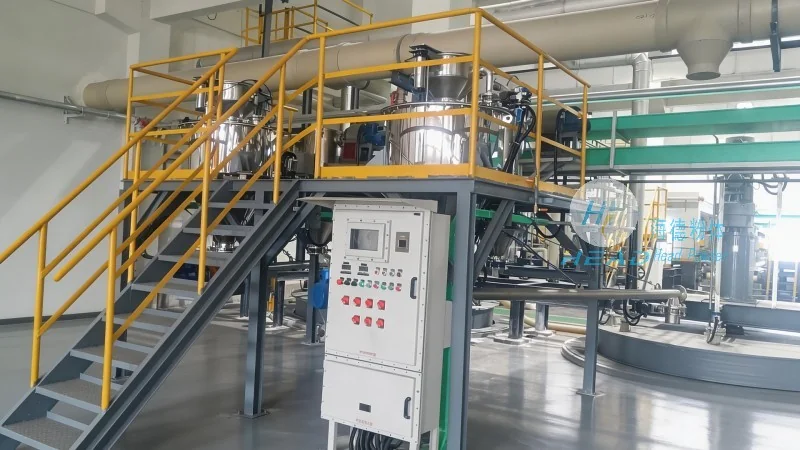
Application-Specific Recommendations
For manufacturers of lithium-ion battery positive electrodes, the choice between positive and negative pressure pneumatic conveying should align with their specific production requirements. Shandong HeadPowder Engineering Co., Ltd., a leading provider of material handling solutions, offers customized pneumatic conveying systems tailored to these needs. With operations based in Shandong, China, HeadPowder leverages years of experience in the battery materials industry to design and implement efficient conveying solutions that optimize production efficiency and minimize operational risks.
Conclusion
In conclusion, selecting the appropriate pneumatic conveying system for lithium-ion battery positive electrodes requires a thorough understanding of both the material characteristics and the operational constraints of the manufacturing process. Positive pressure systems offer high throughput and long-distance conveying capabilities, while negative pressure systems provide gentle material handling and a clean environment. By carefully evaluating these factors, manufacturers can choose the most effective system to ensure efficient and reliable material transport, ultimately supporting the production of high-quality lithium-ion batteries.