

What is Heavy Powder Pneumatic Conveying? Classification and Applications of Pneumatic Conveying
Heavy powder pneumatic conveying represents a sophisticated method for transporting bulk materials, particularly fine powders and granules, through a sealed pipeline using air or other gases as the primary conveying medium. This technology is indispensable in industries such as pharmaceuticals, food processing, and chemical manufacturing, where the handling of delicate or sensitive powders demands precision, control, and minimal contamination. The process operates by generating a flow of air within the pipeline, which effectively suspends the powder particles and propels them from the source to the destination. Unlike traditional mechanical conveying systems, which rely on belts, screws, or buckets, pneumatic conveying eliminates direct contact between the material and mechanical components, thereby preserving the integrity of the powder and reducing the risk of contamination. This characteristic makes it an ideal solution for applications where product purity and hygiene are non-negotiable, such as in the production of pharmaceuticals or high-value food products.
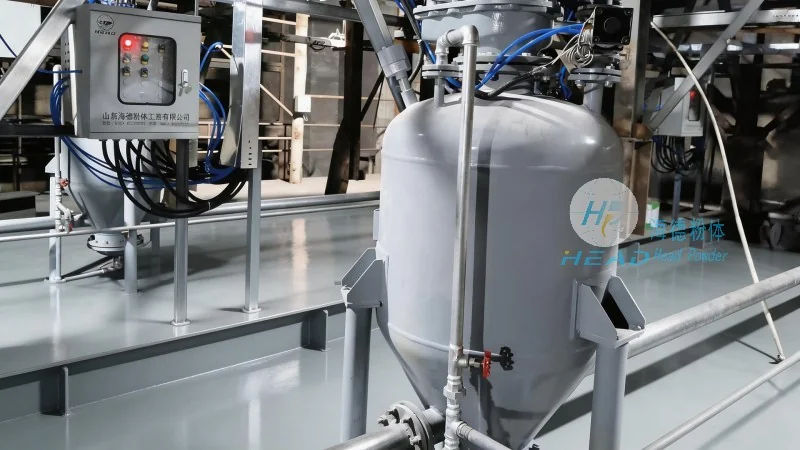

Classification of Pneumatic Conveying Systems
Pneumatic conveying systems are categorized primarily based on the pressure regime and the phase of material transport, with two main types being widely recognized: dilute-phase and dense-phase systems. Dilute-phase systems function at relatively low to moderate pressures and utilize high-velocity air to suspend the powder particles, typically at velocities exceeding 20 meters per second. This method is particularly suited for short to medium-distance transport of light powders and is commonly employed in applications like dust collection, material transfer between processing units, and bulk material handling in manufacturing facilities. The key advantage of dilute-phase systems lies in their ability to handle large volumes of material efficiently with minimal equipment complexity. In contrast, dense-phase systems operate at higher pressures and employ lower air velocities to transport materials in a more concentrated, plug-like flow. This approach is ideal for handling abrasive, sticky, or high-value powders, as it reduces particle degradation and ensures a more stable transport process. Dense-phase systems are frequently used in long-distance transport scenarios, such as in the cement and coal industries, where the material must be moved over considerable distances while maintaining its quality. Additionally, hybrid systems combine elements of both dilute and dense-phase operations, offering flexibility to handle a wide range of material characteristics and operational requirements.

Applications of Pneumatic Conveying in Industrial Settings
The adaptability of pneumatic conveying systems makes them a versatile solution across diverse industrial sectors. In the pharmaceutical industry, for instance, heavy powder pneumatic conveying is utilized to transport active pharmaceutical ingredients (APIs) and excipients with exceptional precision. The controlled environment and minimal mechanical contact ensure that the materials remain free from contamination, preserving their sterility and purity, which are critical for drug manufacturing. The system's ability to handle fine powders at high speeds allows for efficient integration into production lines, reducing processing time and enhancing overall productivity. In the food industry, this technology is employed to handle sensitive food powders, including dairy products, spices, and flavorings. The gentle handling of these materials prevents flavor loss, nutritional degradation, and microbial contamination, ensuring that the final product meets stringent safety and quality standards. Similarly, in the chemical industry, pneumatic conveying is used to transport reactive or hazardous powders, such as chemicals used in manufacturing or industrial processes. The system's ability to control the flow and minimize exposure to personnel enhances workplace safety, while also maintaining the integrity of the material. The versatility of pneumatic conveying also extends to other industries, including mining, where it is used to transport minerals and ores, and in the agricultural sector, where it aids in the handling of grain and other bulk agricultural products.

Company Profile: Shandong HeadPowder Engineering Co., Ltd.
Shandong HeadPowder Engineering Co., Ltd., commonly known as headpowder, is a leading provider of advanced pneumatic conveying solutions, specializing in the design, manufacturing, and installation of systems tailored for heavy powder applications. With a strong focus on innovation and customer-centric service, the company leverages decades of expertise in material handling technology to deliver customized solutions that meet the unique needs of various industries. HeadPowder's team of experienced engineers and technicians work closely with clients to conduct thorough material analysis and process evaluation, ensuring that the final system is optimized for performance, efficiency, and reliability. The company's facilities, located in Shandong, China, are equipped with state-of-the-art equipment and adhere to international quality standards, such as ISO 9001 and ISO 14001, to guarantee the highest level of product quality and environmental compliance. By combining cutting-edge engineering with practical application knowledge, headpowder delivers systems that help clients improve their material handling processes, reduce operational costs, and enhance overall productivity. The company's commitment to research and development ensures that it stays at the forefront of technological advancements in pneumatic conveying, enabling it to offer solutions that address the evolving challenges of modern industrial operations.