

Operation Process and Working Principle of Wheat Bran Pneumatic Conveying Lines
Wheat bran pneumatic conveying lines are essential equipment in the grain processing industry, designed to efficiently transport wheat bran and other bulk materials. As a leading manufacturer in this field, Shandong HeadPowder Engineering Co., Ltd. specializes in providing high-quality pneumatic conveying solutions tailored to the specific needs of food processing and agricultural sectors. This article delves into the operation process and working principle of such systems, highlighting the technical aspects and practical applications that make them indispensable in modern material handling.

Overview of Wheat Bran Pneumatic Conveying Systems
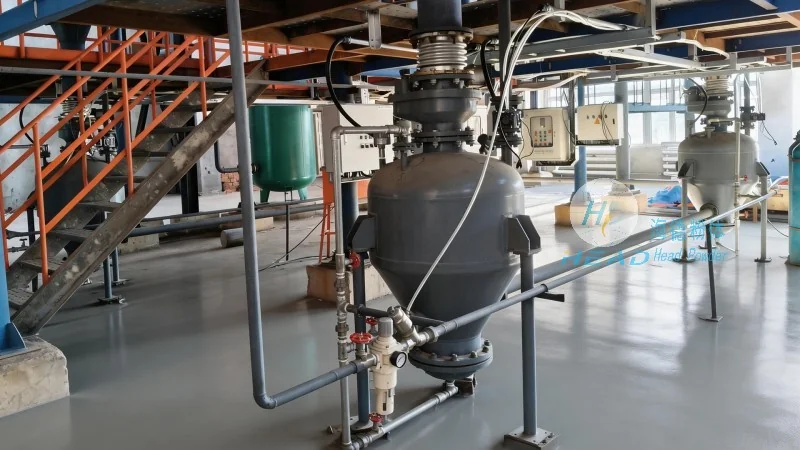
Wheat bran pneumatic conveying lines are designed to move bulk materials like wheat bran from one location to another using air pressure. These systems are widely used in flour mills, feed production facilities, and other agricultural processing plants due to their ability to handle fine, dusty materials without the need for mechanical components that might cause contamination or damage. The core components of a typical pneumatic conveying system include a hopper for material storage, a conveyor line (either a pipeline or a flexible hose), a fan or blower to generate airflow, and a control system to regulate the flow rate and pressure.
Working Principle of Pneumatic Conveying
The fundamental principle behind pneumatic conveying is the use of air to transport solid particles. There are two main types of pneumatic conveying systems: suction (or vacuum) and pressure systems. In suction systems, a fan creates a negative pressure that draws material from the hopper into the pipeline. The material is then carried by the air stream to the discharge point. In pressure systems, a blower pushes air into the pipeline, forcing the material to move forward. For wheat bran, which is a fine, light material, suction systems are often preferred as they can handle the material more gently and with less risk of blockages.
Key Components and Their Functions
Each component of a wheat bran pneumatic conveying line plays a critical role in ensuring efficient and reliable operation. The hopper, typically made of stainless steel or other food-grade materials, stores the wheat bran and provides a consistent feed to the system. It often includes a feeder mechanism, such as a rotary valve or a screw conveyor, to control the flow of material into the pipeline. The conveyor line, usually made of stainless steel or PVC, is designed to withstand the pressure and abrasion from the material and air. The fan or blower is the heart of the system, providing the necessary airflow to move the material. It can be a centrifugal fan for suction systems or a positive displacement blower for pressure systems. The control system, which may include sensors and a programmable logic controller (PLC), monitors the system's performance and adjusts the airflow and feed rate as needed to maintain optimal operation.
Operation Process of a Wheat Bran Pneumatic Conveying Line
The operation of a wheat bran pneumatic conveying line typically follows a sequence of steps to ensure smooth and continuous material transport. First, the wheat bran is fed into the hopper from a storage silo or other source. The feeder mechanism then regulates the flow of material into the pipeline, ensuring a consistent feed rate. Next, the fan or blower is activated, creating the necessary airflow to transport the material. The material is drawn into the pipeline by the suction force and carried to the discharge point, where it is collected in a receiving bin or directly into a processing unit. The control system continuously monitors the system's parameters, such as pressure, flow rate, and material level, and adjusts the settings to maintain optimal performance. If any issues arise, such as a blockage or a change in material flow, the control system will trigger alarms or automatically adjust the system to prevent damage or downtime.
Advantages of Wheat Bran Pneumatic Conveying Lines
Wheat bran pneumatic conveying lines offer several advantages over traditional mechanical conveying systems. First, they are highly efficient, as they can transport large volumes of material over long distances with minimal energy consumption. Second, they are gentle on the material, reducing the risk of damage or contamination, which is particularly important for food-grade products like wheat bran. Third, they are flexible and can be easily integrated into existing processing lines. Fourth, they are relatively low maintenance, as they have fewer moving parts compared to mechanical conveyors. Finally, they are hygienic and easy to clean, which is essential in food processing environments.

Applications and Industries
Wheat bran pneumatic conveying lines are widely used in various industries, including food processing, animal feed production, and agricultural processing. In food processing, they are used to transport wheat bran from storage to milling or blending units. In animal feed production, they are used to move wheat bran from storage to feed mixing facilities. In agricultural processing, they are used to transport wheat bran from fields or storage facilities to processing plants. The versatility of these systems makes them suitable for a wide range of applications, from small-scale operations to large industrial facilities.
Conclusion
Wheat bran pneumatic conveying lines are a critical component of modern material handling systems, providing efficient, reliable, and hygienic transport of bulk materials. Shandong HeadPowder Engineering Co., Ltd. is a leading manufacturer of these systems, offering high-quality solutions tailored to the specific needs of the food and agricultural industries. By understanding the operation process and working principle of such systems, users can optimize their material handling processes and improve overall efficiency. With proper maintenance and operation, wheat bran pneumatic conveying lines can provide long-term performance and reliability, making them a valuable investment for any processing facility.