

Operation Process and Working Principle of Dust Powder Conveying System
For industrial applications involving the transport of fine powders and dust, efficient and reliable conveying systems are essential to ensure smooth production workflows. The dust powder conveying system, as a core component in many processing industries, plays a crucial role in material handling. This article will delve into the detailed operation process and working principle of such systems, highlighting the key components, operational steps, and the technical aspects that contribute to their effectiveness. The information is presented by Shandong HeadPowder Engineering Co., Ltd., a leading provider in the field, based in Shandong, China.
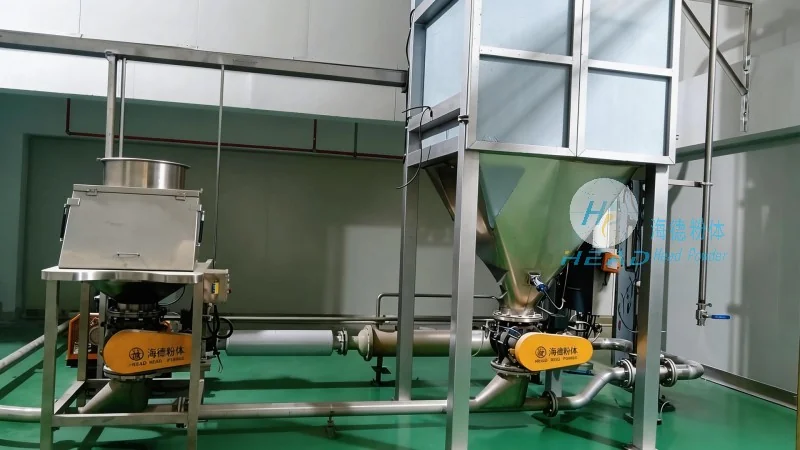
Key Components of the Dust Powder Conveying System
The dust powder conveying system typically consists of several critical components that work in tandem to achieve the desired material transport. These components include the feeding device, the conveying pipeline, the driving unit, the control system, and the discharge equipment. Each component has a specific function that contributes to the overall system performance. The feeding device is responsible for uniformly feeding the powder material into the pipeline, ensuring consistent flow rates. The conveying pipeline, often made of materials like stainless steel or plastic, provides the path for the powder to travel from the source to the destination. The driving unit, which can be a screw conveyor, pneumatic blower, or other types of motors, generates the necessary force to move the powder through the pipeline. The control system monitors and regulates the operation, adjusting parameters as needed to maintain optimal performance. Finally, the discharge equipment collects the material at the end of the pipeline and transfers it to the next processing stage.

Operation Process of the Dust Powder Conveying System
The operation process of a dust powder conveying system involves several sequential steps that ensure the material is transported safely and efficiently. The first step is the preparation phase, where the powder material is prepared and fed into the system. This includes ensuring the material is free from clumps or oversized particles that could cause blockages. The second step is the initiation of the conveying process, where the driving unit is activated and the material begins to move through the pipeline. During this phase, the system maintains a consistent flow rate, which is crucial for preventing material accumulation or clogging. The third step is the monitoring phase, where the control system continuously checks the system parameters, such as pressure, flow rate, and temperature, to ensure everything is operating within the desired range. If any abnormalities are detected, the system may automatically adjust or alert the operator. The final step is the completion of the conveying process, where the material is discharged at the destination and transferred to the next stage of processing. Throughout the entire process, the system is designed to minimize energy consumption and maximize material throughput.

Working Principle of the Dust Powder Conveying System
The working principle of a dust powder conveying system is based on the physical properties of the powder material and the mechanical forces applied to it. There are several common types of conveying systems, each with its own working principle. One of the most common is the pneumatic conveying system, which uses compressed air to transport the powder. In this system, the powder is fed into the pipeline and mixed with the air, creating a slurry-like mixture that is then propelled forward by the air flow. The air pressure and velocity are carefully controlled to ensure the powder is transported without clogging or degradation. Another type is the mechanical conveying system, such as the screw conveyor, which uses a rotating screw to push the powder forward. The screw's rotation creates a pressure gradient that moves the material along the pipeline. The speed of the screw and the pitch of the threads are adjusted to control the flow rate and prevent blockages. The working principle also involves the principles of fluid dynamics and particle mechanics, as the system must account for the behavior of fine particles under different conditions. For example, the system must consider the cohesive forces between particles and the friction between the particles and the pipeline walls to ensure smooth operation. By understanding these principles, engineers can design and optimize the system to meet specific application requirements.
Benefits and Applications of the Dust Powder Conveying System
The dust powder conveying system offers numerous benefits in industrial applications, making it a preferred choice for many industries. One of the primary benefits is its ability to transport fine powders and dust over long distances without the need for manual handling. This reduces labor costs and improves safety by minimizing the risk of exposure to harmful materials. The system also provides consistent and reliable material flow, which is essential for maintaining production efficiency. Additionally, the system can be designed to handle a wide range of powder types, from dry powders to wet or sticky materials, making it versatile for various applications. The benefits extend to energy efficiency, as modern systems are designed to minimize energy consumption while maximizing throughput. The applications of the dust powder conveying system are widespread, including in the chemical, pharmaceutical, food, and mining industries. In the chemical industry, it is used to transport raw materials and finished products. In the pharmaceutical industry, it is used to transport active ingredients and excipients. In the food industry, it is used to transport flour, sugar, and other food powders. In the mining industry, it is used to transport ore and other minerals. The system's versatility and efficiency make it an indispensable tool in these industries.

Conclusion and Company Information
In conclusion, the dust powder conveying system is a critical component in many industrial processes, providing efficient and reliable transport of fine powders and dust. The operation process involves several sequential steps, from preparation to monitoring and completion, while the working principle is based on the physical properties of the material and the mechanical forces applied. The system offers numerous benefits, including improved safety, reduced labor costs, and consistent material flow, making it a preferred choice for various industries. Shandong HeadPowder Engineering Co., Ltd., based in Shandong, China, is a leading provider of such systems, offering customized solutions to meet the specific needs of their clients. With their expertise and advanced technology, they ensure that the systems are designed and manufactured to the highest standards, providing reliable and efficient performance for years to come.