

Operation Process and Working Principle of Cocoa Powder Material Pneumatic Conveying System
The pneumatic conveying system is a critical piece of equipment in the cocoa processing industry, designed to efficiently transport cocoa powder from one location to another while maintaining product quality and integrity. This system is particularly important for handling fine, dry powders like cocoa, which are prone to agglomeration and require gentle handling to prevent degradation. The system developed by Shandong HeadPowder Engineering Co., Ltd. (referred to as HeadPowder) addresses these challenges through a specialized design that ensures reliable and consistent operation.
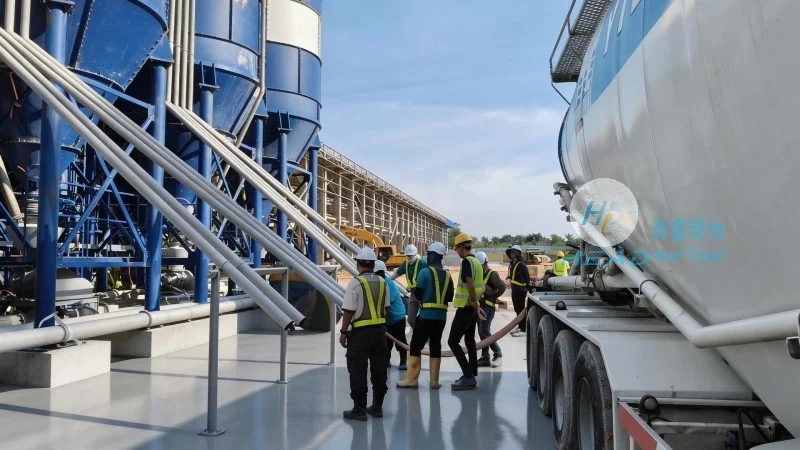
Company Profile: Shandong HeadPowder Engineering Co., Ltd.
HeadPowder is a leading manufacturer specializing in engineering solutions for powder handling and material transport. With a focus on industrial applications, the company has built a reputation for delivering high-quality, customized pneumatic conveying systems tailored to the needs of various industries, including food processing. HeadPowder's headquarters is located in Shandong, China, where the company leverages advanced technology and expertise to develop innovative solutions for its clients.

Working Principle of the Pneumatic Conveying System
The core of the pneumatic conveying system is the use of air to move solid particles through a pipeline. There are two primary types of pneumatic conveying: positive pressure and negative pressure systems. For cocoa powder, a positive pressure system is often preferred as it provides better control over the flow and reduces the risk of product contamination. The system operates by creating a pressure differential between the inlet and outlet of the pipeline. At the inlet, a fan or blower generates high-pressure air, which draws cocoa powder from the storage hopper into the pipeline. The air and powder mixture then travels through the pipeline to the discharge point, where the air is separated from the powder and either recirculated or vented.

Operation Process of the System
The operation of the cocoa powder pneumatic conveying system involves several key steps. First, the system is started by activating the blower, which establishes the necessary air pressure. The cocoa powder is then fed into the system from the storage silo or hopper using a rotary valve or feeder. As the air flows through the pipeline, it lifts the cocoa powder particles and transports them to the destination, such as a packaging machine or another processing unit. At the discharge point, a cyclone separator or filter is used to separate the air from the powder. The separated air is typically recirculated back to the blower to conserve energy, while the cocoa powder is collected in a receiving container. The system is designed to operate continuously, with minimal downtime, ensuring a steady supply of cocoa powder to downstream processes.
Key Features and Technical Advantages
The pneumatic conveying system for cocoa powder offers several advantages that make it an ideal choice for industrial applications. One of the primary benefits is its ability to handle fine, dry powders without causing agglomeration or degradation. The system's design minimizes product contact with metal surfaces, reducing the risk of contamination and maintaining the natural flavor and color of the cocoa powder. Additionally, the system is highly efficient in terms of energy consumption, as the air is recirculated rather than vented to the atmosphere. This not only reduces operating costs but also minimizes environmental impact. The system is also flexible and can be customized to accommodate different flow rates and pipeline configurations, making it suitable for various production scales.

Application Scenarios
The cocoa powder pneumatic conveying system is widely used in the cocoa processing industry for a range of applications. In storage facilities, the system can be used to transfer cocoa powder from large storage silos to processing lines, ensuring a consistent supply of raw material. During the processing stage, the system can transport cocoa powder from grinding and refining equipment to packaging machines, streamlining the production workflow. The system is also suitable for use in quality control applications, where cocoa powder is sampled and analyzed for moisture content or particle size. Overall, the system enhances operational efficiency and product quality in cocoa processing facilities.